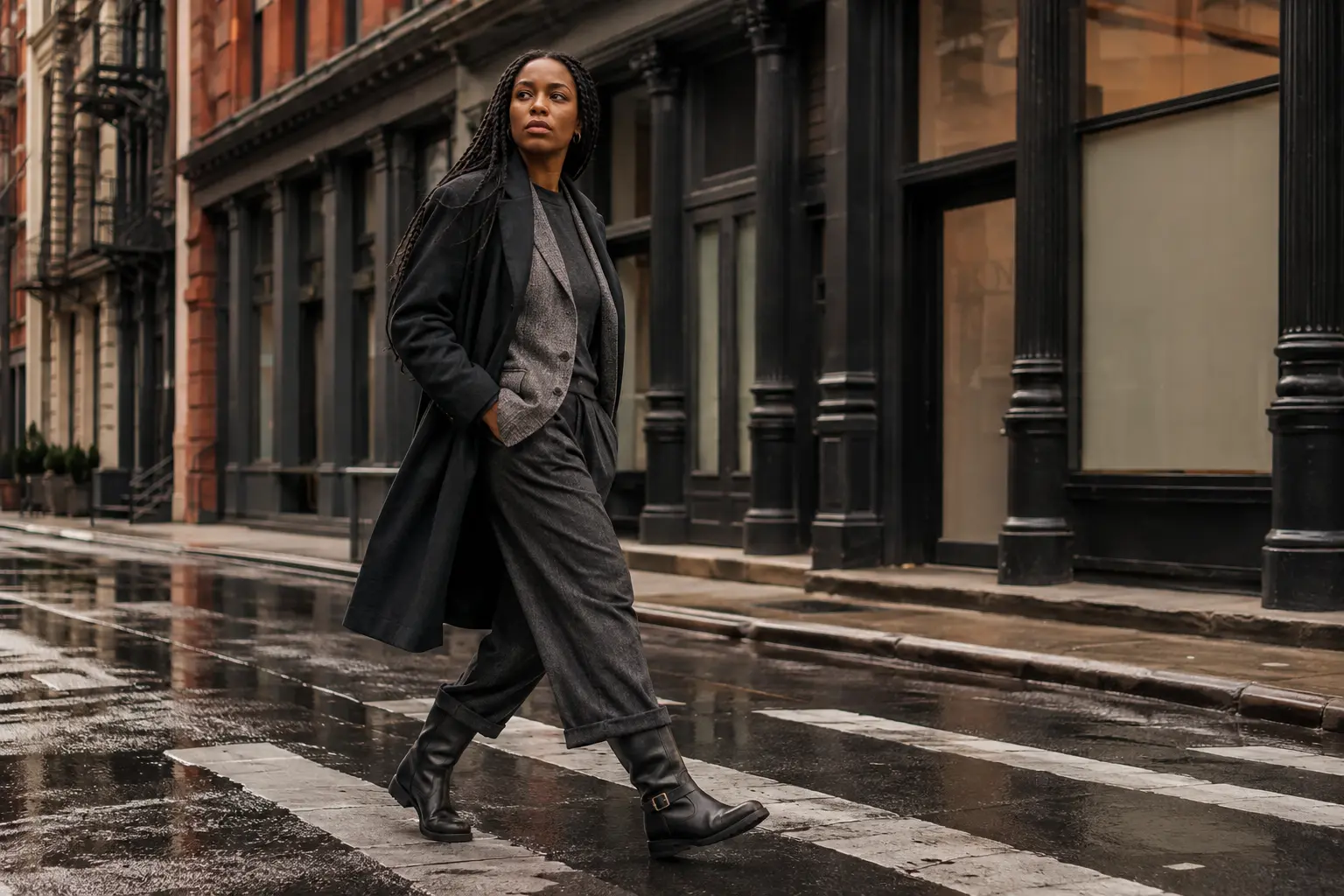
You can tell a lot about a New York outfit by waiting until it has to cross the street after a rainstorm.
The coat may look expensive. The sunglasses may suggest a mysterious afternoon commitment. The bag might be shaped like a small architectural proposal. None of that matters once the curb reveals a puddle large enough to apply for its own ZIP code.
Then we meet the shoes.
Real New York street style is not the opposite of practical dressing. At its best, it is the art of making practical decisions look like personal taste.
The sidewalk is part of the outfit
Fashion photographs often pretend the city is a smooth, climate-controlled hallway. Actual New York has subway stairs, uneven pavement, sudden weather, crowded corners, long walks, and the occasional mystery liquid best approached with caution.
The shoe that survives all of this is not automatically boring. It may be a beautifully made boot, a comfortable loafer, a sneaker that works with tailoring, or a flat with enough structure to last beyond the first appointment.
Comfort depends on the person. There is no universal perfect New York shoe. Foot shape, mobility, budget, work requirements, weather, and personal style all change the answer.
What matters is whether your outfit can live the same day you are planning to live.
Style is stronger when it stops apologizing for comfort
Somewhere along the line, people started describing comfortable clothing as if it needed a justification. Practical became the polite word for something allegedly less fashionable.
That is nonsense.
A great shoe can be supportive, durable, beautiful, and expressive without causing a personal crisis by lunchtime. A coat can keep you warm and still have shape. A bag can carry what you need without looking like you lost an argument with a suitcase.
The most persuasive outfits often look relaxed because the wearer is not spending all their energy managing the clothes.
Confidence is easier when your feet are not negotiating surrender.
Notice the details that belong to real life
Look for a clean sole, a repaired heel, socks that make sense with the weather, or a pair of boots that has clearly seen more than one season. These are not flaws in the look. They are evidence the outfit participates in somebody’s actual routine.
New Yorkers mix high and low, old and new, tailored and casual, polished and a little unexpected. The strongest version of that mix rarely looks like a store display copied without changes.
A good outfit may include something secondhand, something repaired, something gifted, and something purchased because it genuinely solved a problem. Personal style gets interesting when the pieces tell the truth about how you move.
The weather is not a suggestion
Check the forecast, but remember that conditions change. Rain-resistant footwear, a compact umbrella, breathable layers, and a bag with a secure closure can make the difference between an enjoyable afternoon and a very expensive inconvenience.
Material claims deserve scrutiny. Water-resistant does not necessarily mean waterproof. Leather, suede, canvas, rubber, and synthetic materials require different care. Ask a qualified repair professional about protecting or restoring shoes rather than trusting a random online shortcut.
Read our story on why neighborhood shoe repair still matters before deciding a worn pair is finished.
A trend does not know your commute
Fashion trends can be fun. They can also assume everyone travels by car, works indoors, and has an unlimited budget for replacements.
Before buying something, ask where you would actually wear it. Can you walk comfortably? Does it suit your workday? Will it survive a crowded train? Does it require maintenance you are willing and able to manage?
There is no prize for purchasing a popular shoe that never leaves the closet. Admiring a look is free. Buying it is a separate decision.
The same goes for influencer recommendations. Look for clear sponsorship disclosures, honest comfort information, and enough detail to understand whether the advice applies to your life.
The best-dressed person may not be the loudest
It might be the woman in a sharp coat and broken-in boots, stepping around the puddle without losing momentum. Or the guy wearing polished loafers with relaxed trousers and a bag that fits everything he needs. Or the teenager who figured out how to make sensible sneakers look entirely their own.
Style is not restricted to runway access, age, body size, income, or a specific neighborhood. It appears wherever someone makes thoughtful choices and carries them with ease.
That broader view makes New York fashion more interesting than a narrow parade of approved silhouettes.
Give your clothes a useful life
Clean what you own. Repair when it makes sense. Rotate shoes if you can. Pay attention to fit rather than forcing your body to accommodate an uncomfortable purchase.
If a trend genuinely excites you, enjoy it. If your favorite old boots still work, enjoy those too. There is no need to replace a personal style that already supports your actual day.
Explore more New York style and beauty stories, including our September fashion-week perspective.
The final test happens at the curb
The light changes. The street is wet. Someone is approaching too fast on a scooter. You need to cross, catch a train, meet a friend, and remain recognizably yourself throughout the whole sequence.
If the shoes can do that, the outfit is doing its job.
New York does not require you to suffer to look good. It only asks that your style knows where it is standing.
There is another quiet benefit to dressing for the city you actually live in: you become available to enjoy it. You can take the longer route, stop to inspect a bookstore window, agree to an unexpected dinner, or walk somebody home without calculating whether your footwear can survive the decision. That flexibility has its own elegance. A beautiful outfit does not lose anything by making room for your comfort. Usually, it gains the part people notice most: ease.
Strong Signal
Worth making the trip.
See something that needs attention? Send a correction. We review factual notes and attach meaningful updates to the article.