There is a particular kind of clothing purchase that is really an administrative failure. The black trousers are fine. Their hem is not. The cardigan still works with half your wardrobe, except one button has departed and apparently taken your entire willingness to wear it along. So you buy something else. The old thing remains on a chair, quietly becoming furniture.
September is a good moment to interrupt that arrangement. Before deciding what your fall wardrobe lacks, separate what is actually missing from what is waiting for ten minutes of attention or a professional estimate. Those are different shopping lists. Only one of them necessarily needs a shopping bag.
This is a maintenance edit, not an instruction to keep everything forever. A garment can be uncomfortable, worn beyond a sensible repair, or simply wrong for you. Keeping it out of guilt does not make it useful. The interesting candidates are the pieces you still like but have stopped reaching for because one specific thing gets in the way.
Give the problem a name
Pull out three of those pieces. Three is a manageable appointment. Your entire closet is a weekend you will resent. Put each garment on and identify the obstacle as precisely as possible: a loose fastening, a dragging hem, a lining that catches, a pocket seam that has opened.
That little diagnosis matters. A vague declaration that something looks tired invites a vague solution involving a new purchase. A missing button is a smaller conversation. So is a trouser length that worked with a shoe you no longer wear. Bring the shoes you actually use when discussing a hem with a tailor. The pavement gets a vote.
If the fit itself is wrong, ask what can realistically change before committing. An alteration estimate should include cost, timing and the intended result. A cheap garment does not automatically deserve an expensive reconstruction. An expensive one does not automatically make reconstruction possible. Fabric, construction and available seam allowance set limits that enthusiasm cannot negotiate away.
Buttons can change the mood
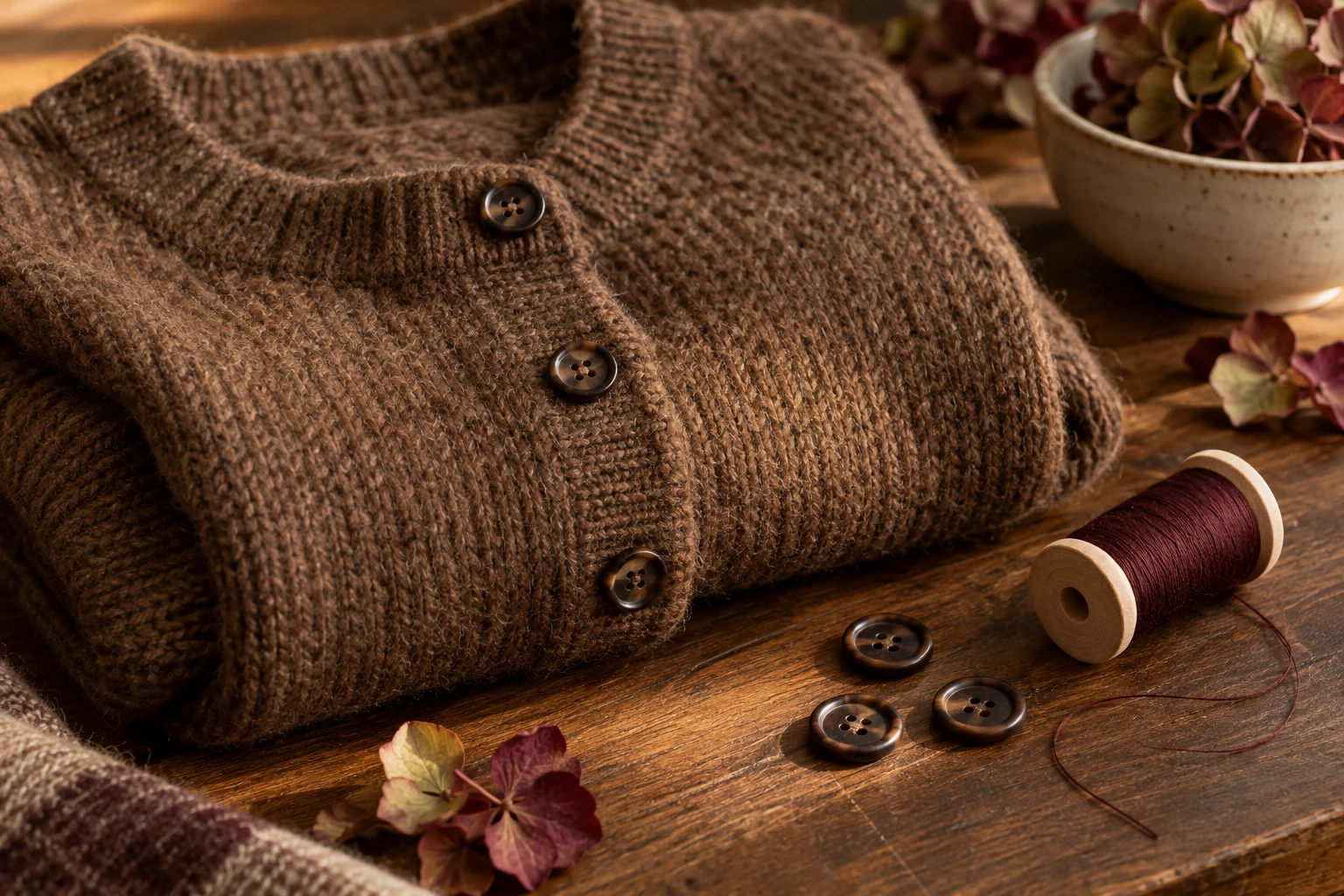
A replacement need not imitate the original perfectly. A full matching set can make a familiar cardigan feel more deliberate, provided the size and thickness work with its buttonholes. This is a small styling decision with an actual function. It is also less demanding than finding a completely new sweater in exactly the right shape.
Keep the original fastenings if they matter to you, and ask before replacing anything distinctive. Vintage pieces, delicate fabrics and sentimental clothes deserve a considered approach. The point is to restore a garment to your life, not to turn every repair into a makeover project.
Knitwear calls for a little restraint too. Read its care label before washing or attempting to remove pills. If the fabric is fragile or the damage involves holes and unraveling, show it to someone who works with knits. A dramatic online cleaning trick is not a substitute for knowing what the fiber can tolerate.
Put the repaired piece straight back to work
When something returns, wear it soon. Build an outfit around it with things already available, then notice whether the original problem is resolved. This is the useful test. Looking pristine on a hanger is not the same as surviving a workday, a train ride and whatever happens after dinner.
There may still be a real gap. Perhaps you need a warmer layer or trousers that fit your current body comfortably. Buy for that gap with better information. You have already ruled out the phantom emergency created by a loose seam.
Set a small repair budget if it helps, but do not turn this into another self-improvement regime. One cardigan back in rotation is a perfectly respectable result. The chair can return to its original profession. You can spend the morning deciding what to wear instead of remembering why you cannot wear it.
Image note: Original editorial concept imagery. The garment is not an advertised product.
See something that needs attention? Send a correction. We review factual notes and attach meaningful updates to the article.