A film festival reveals itself twice. First, the lineup arrives and everyone begins circling titles. Then the screenings start, and the movies that looked essential on paper make room for the ones nobody expected to carry into dinner.
The 64th New York Film Festival runs from September 25 through October 12, 2026, at Film at Lincoln Center and other locations across New York City. The official schedule is expected in late August. Single tickets are scheduled to go on sale September 15 at noon Eastern Time, with earlier access attached to passes and membership levels.
Those are the planning facts. The more interesting question is what kind of conversation NYFF64 wants to create this year. Borough Signal has not attended the 2026 festival, which has not begun. This preview is based on the official program and the history of the festival. It will not manufacture reactions to films we have not seen.
Start with the sections, not the pressure
Festival lineups can make ordinary moviegoers feel as if they have arrived late to a class. There are titles from major filmmakers, discoveries from directors whose names are new to many readers, restorations, shorts, talks, and screenings that seem to sell out while you are still reading the description.
The useful move is to understand the sections before choosing individual films. The Main Slate generally carries the central curatorial statement. Currents makes room for formally adventurous work and new ways of thinking about the moving image. Spotlight widens the field with anticipated premieres, performances, and other major presentations. Revivals return older films to serious attention, often in restored form. Talks allow the ideas around the movies to breathe.
You do not need to treat one section as more legitimate than another. A revival can be the most surprising night of the festival. A short film program can introduce a filmmaker whose work stays with you longer than the heavily promoted premiere.
The famous title is not always the signal
Prestige creates gravity. When a film arrives with awards, celebrity names, or months of international attention, it can pull the entire festival conversation toward itself. That attention may be deserved. It can also make quieter work harder to see.
Look beyond the top line of the program. Read the notes written by the festival programmers. Notice which films appear in conversation with one another. Pay attention to countries, forms, and filmmakers you do not regularly encounter in commercial theaters. A festival is one of the few places where curiosity can be more useful than familiarity.
The goal is not to avoid popular films in order to prove superior taste. It is to resist letting advance reputation make every choice for you.
What we are watching in the 2026 conversation
NYFF64 arrives at a moment when moviegoing is still being renegotiated. Theatrical windows change. Streaming platforms affect which international films find an audience. Filmmakers work across features, series, short-form platforms, galleries, and phones. At the same time, a festival audience still gathers in a room and agrees to look in one direction for a while.
That shared attention is not old-fashioned. It may be the festival’s most modern quality. The room produces a kind of concentration that cannot be duplicated by a recommendation feed. People laugh at different moments, shift in their seats, and leave with competing interpretations.
We will be watching for films that use the screen rather than merely fill it. We are interested in work that takes formal risks without treating confusion as depth, and in stories that understand place as more than attractive background.
Tickets require a strategy, not panic
The official schedule is the point when a festival becomes a calendar problem. Before tickets go on sale, identify a small group of priorities and a second group of alternatives. Check running times, venue locations, and the space between screenings. A beautiful three-film day on a spreadsheet can become an unpleasant endurance test in practice.
Membership and passes can provide earlier access, but they only make sense if the benefits fit how you plan to attend. Read the current terms rather than assuming a pass guarantees every seat. Single-ticket buyers should be ready at the announced sale time, while remembering that additional tickets can appear as plans change.
If a screening sells out, do not let scarcity convince you it was the only worthwhile choice. Festivals contain more good work than the loudest queue suggests.
The lobby is part of the program
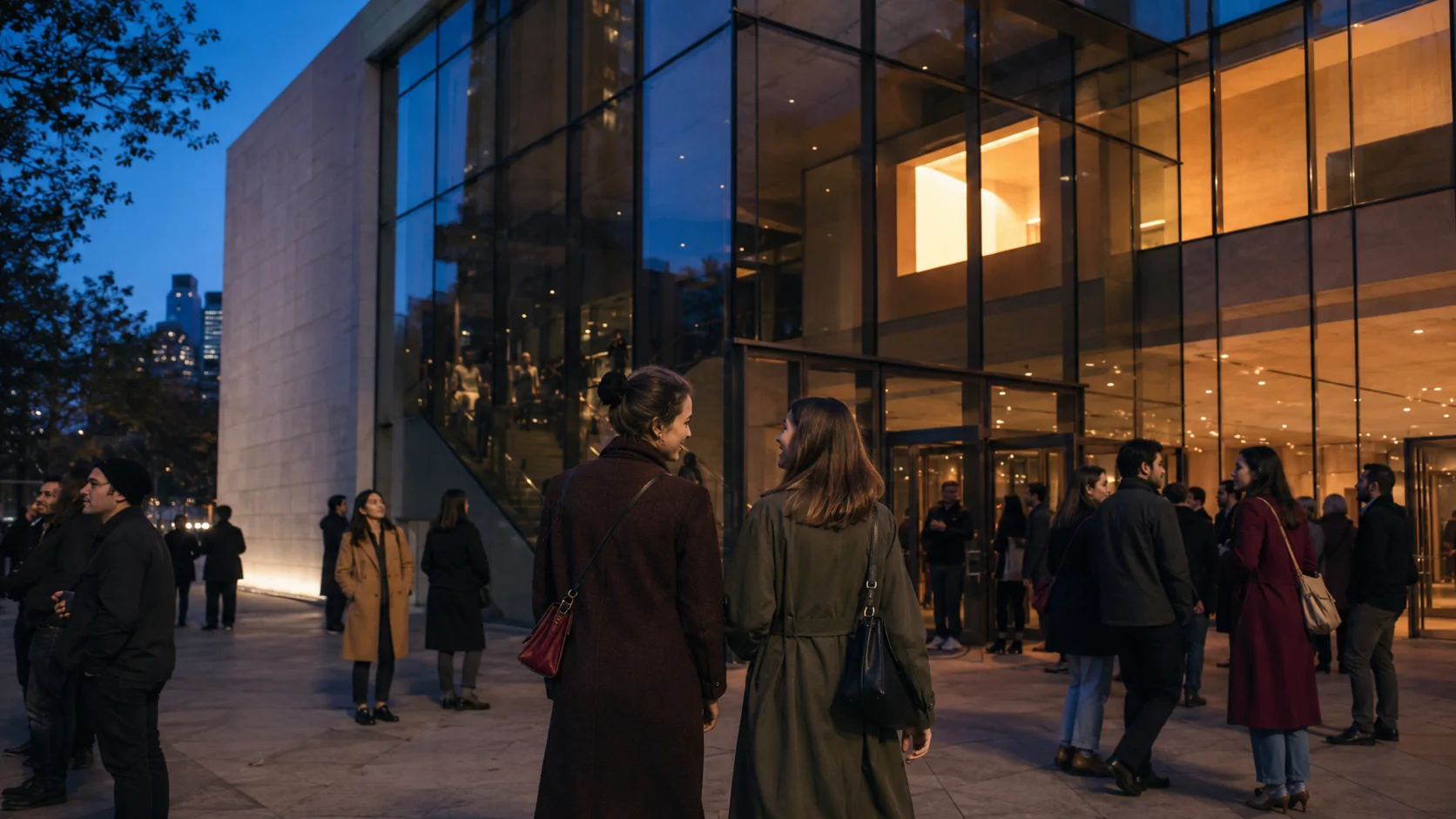
Film at Lincoln Center gives NYFF a particular social geography. The plaza, the theaters, the stairs, nearby cafés, and the walk toward the subway become informal extensions of the screening. People compare reactions before they have fully decided what they think.
That uncertainty is valuable. A movie can be disappointing and still produce a sharp conversation. Another can feel slight until one image returns hours later. Festivals are built from this delayed understanding.
Readers who dislike public debate do not have to perform an instant opinion. There is no prize for delivering the fastest verdict outside the theater. Take the walk. Read the credits. Let the film remain unresolved.
What makes a Borough Signal recommendation
We will not label a 2026 film Strong Signal because its director is famous or because another publication praised it. A meaningful recommendation requires viewing the work. Until that happens, our coverage will distinguish preview information from criticism.
When the festival begins, useful reporting should answer more than whether a movie is good. Who might respond to it? What kind of attention does it ask for? Does the discussion around it illuminate the work or merely repeat its publicity? Is the screening experience part of the reason to attend?
NYFF has survived because it does not behave like a regular night at the movies. It asks New York to treat cinema as a public event and a serious art form. The 2026 lineup will make its own case. For now, the best preparation is not hype. It is an open evening, a carefully chosen ticket, and enough time afterward to argue with a friend.
City Signal
Something especially memorable or important to the city.
PRIMARY SOURCEFilm at Lincoln Center: NYFF64 ↗
See something that needs attention? Send a correction. We review factual notes and attach meaningful updates to the article.