Harlem does not need an annual festival to prove its importance. It does not need a slogan, a celebrity appearance, or a visitor’s discovery story. The neighborhood has already shaped music, politics, literature, business, food, visual art, dance, faith, language, and the imagination of Black life far beyond New York.
That is exactly why Harlem Week matters. A celebration can do more than attract a crowd. It can decide what history stays visible, which local institutions receive attention, and how a neighborhood speaks about itself while the rest of the city changes around it.
Harlem Week began as Harlem Day more than 50 years ago and grew into a multi-week cultural institution with programming connected to community, commerce, education, health, performance, and history. The official 2026 calendar should be checked before attending any specific event. This Signal Desk feature is about the frame around that calendar.
The name contains a useful contradiction
Harlem Week is longer than a week. The mismatch has become part of its identity. What began as a single day expanded because the neighborhood’s cultural life could not be contained by one date or one stage.
That growth also reflects the demands placed on large community celebrations. They are expected to honor history, create economic opportunity, entertain families, welcome visitors, support local organizations, and present a future. Those goals do not always fit together neatly.
The strongest programs do not pretend they do. They allow a health event, a concert, a business forum, a youth activity, and a historical discussion to share the same larger celebration without forcing them into one tone.
Harlem is not frozen at its most famous moment
Visitors often approach Harlem through a narrow historical window. The Harlem Renaissance becomes the entire story, or the neighborhood is reduced to a set of music landmarks and restaurants. That history deserves serious attention. It should not trap Harlem in the past.
Contemporary Harlem contains long-established families, new residents, public housing communities, brownstones, churches, schools, small businesses, major institutions, street vendors, nightlife, tourists, artists, and people simply trying to afford another year in the neighborhood. The tensions of development and displacement are not separate from culture. They influence who gets to remain close to the institutions and traditions being celebrated.
A responsible Harlem Week story must hold legacy and present-day pressure together. Celebration without context becomes a postcard.
A festival can direct money as well as attention
Large public events bring spending. The question is where it goes. Visitors can support Harlem businesses, but good intentions are not a guarantee. National brands often have bigger signage and easier visibility than the shop one block away.
Before attending, look at the route and identify locally owned businesses that fit your actual needs. Buy a meal because you want the meal, not because you are performing support for a photograph. Return outside the festival period if the experience gives you a reason.
Vendors and exhibitors should be treated as businesses, not decoration. Ask before photographing identifiable workers or products up close. Do not block a table while recording commentary. Small acts of consideration keep a public celebration from becoming extractive.
The crowd is part of the archive
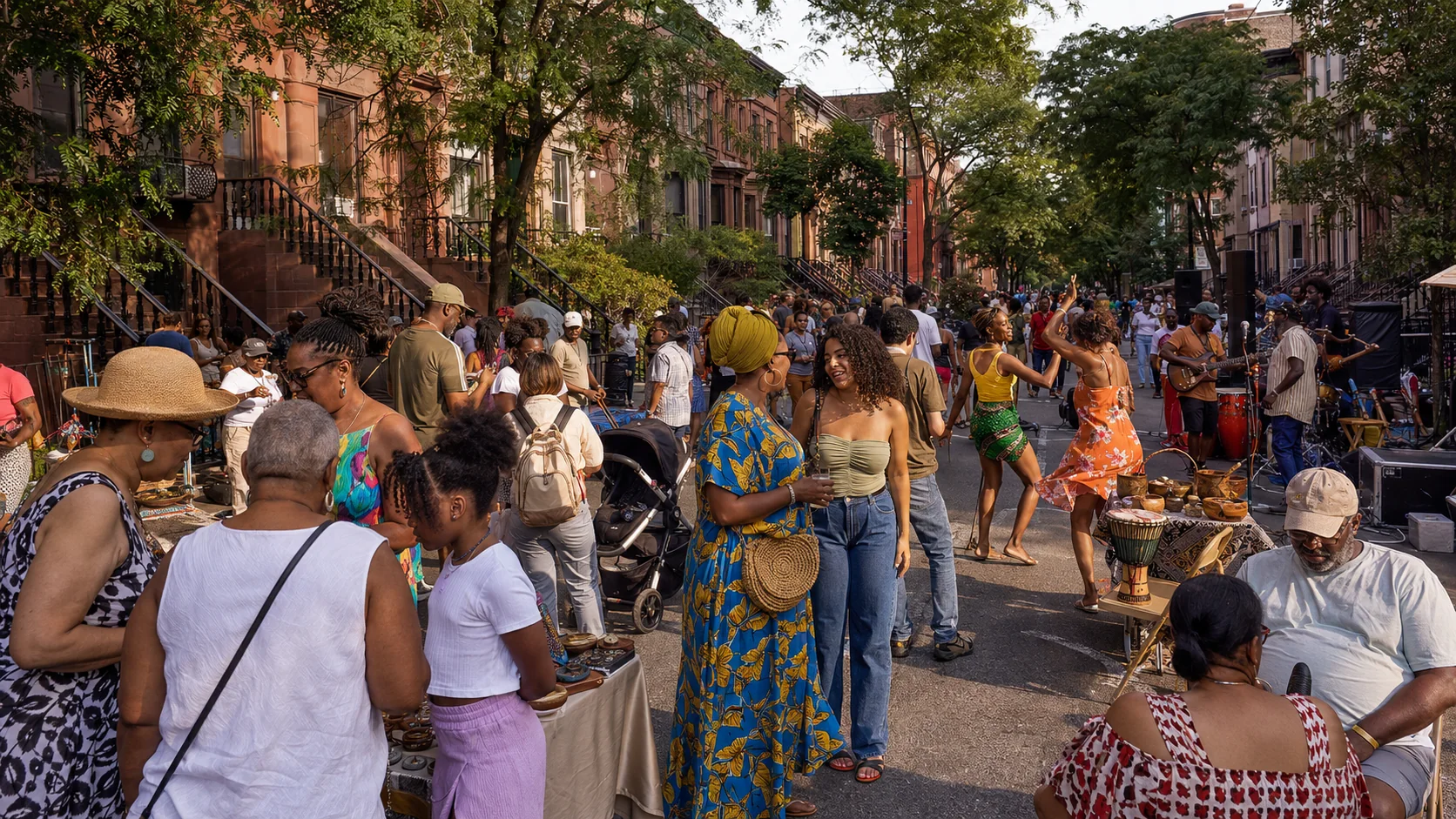
Harlem Week has lasted long enough for several generations to remember different versions of it. One person recalls a particular concert. Another remembers being brought as a child. A local business owner measures the weekend by foot traffic. A performer remembers the first large audience that took them seriously.
Those memories form an unofficial archive. They explain why the celebration can matter even to someone who has no interest in the headline act. Repetition creates tradition, but each year also records what the neighborhood looks like at that moment.
This is one reason not to describe Harlem Week as merely an event worth visiting. For many people, it is a recurring piece of community time.
Visitors should arrive ready to listen
There is nothing wrong with being new to Harlem Week. Public events are public. The problem begins when a visitor treats the neighborhood as a discovery made for personal consumption.
Read the official program and some basic neighborhood history. Learn which organization is presenting an event. Notice whether it is designed primarily for residents, business networking, families, or a broad audience. Follow posted photography rules. Give elders and families space. Ask questions that are not demands for free labor.
The point is not to make attendance anxious. It is to replace entitlement with attention.
Culture and politics have always shared the street
Harlem’s cultural history is inseparable from organizing, institution building, journalism, faith, and political debate. A stage can hold entertainment and still sit inside a neighborhood with urgent concerns about housing, education, safety, public space, and ownership.
Harlem Week’s long life places it within that tradition of public gathering. The celebration offers pleasure, but pleasure does not cancel seriousness. Music, food, dance, and fashion can carry memory and identity without turning into lectures.
Coverage should make room for that complexity. Not every performance needs to be translated into a policy point. Not every policy discussion should be treated as less exciting than a concert.
What a successful Harlem Week leaves behind
The easiest success metric is attendance. A crowded avenue photographs well. It does not tell us whether local organizations gained members, businesses found customers, young people found opportunities, or residents felt represented.
The more meaningful outcomes take longer to see. A connection made at a career event, a child watching a local artist onstage, a visitor learning the name of an institution they later support, or a business earning repeat customers may never appear in a recap video.
That does not make those outcomes less real. It makes them harder to count.
Go for the program, return for the neighborhood
Use the official Harlem Week calendar to confirm 2026 dates, times, locations, weather plans, and registration requirements. Choose events that match your interests. Expect transit and street conditions to change around large programs. Bring water, protect yourself from summer heat, and keep your schedule flexible.
Then come back when no festival stage is present. Visit a cultural institution. Buy from a local shop. Walk without turning the neighborhood into a checklist. Read work by Harlem writers. Follow local reporting.
Harlem Week offers another reason to pay attention, but the attention should not expire when the banners come down. Harlem is not a detour from the New York story. It is one of the places where that story keeps being written.
PRIMARY SOURCEHarlem Week official site ↗
See something that needs attention? Send a correction. We review factual notes and attach meaningful updates to the article.