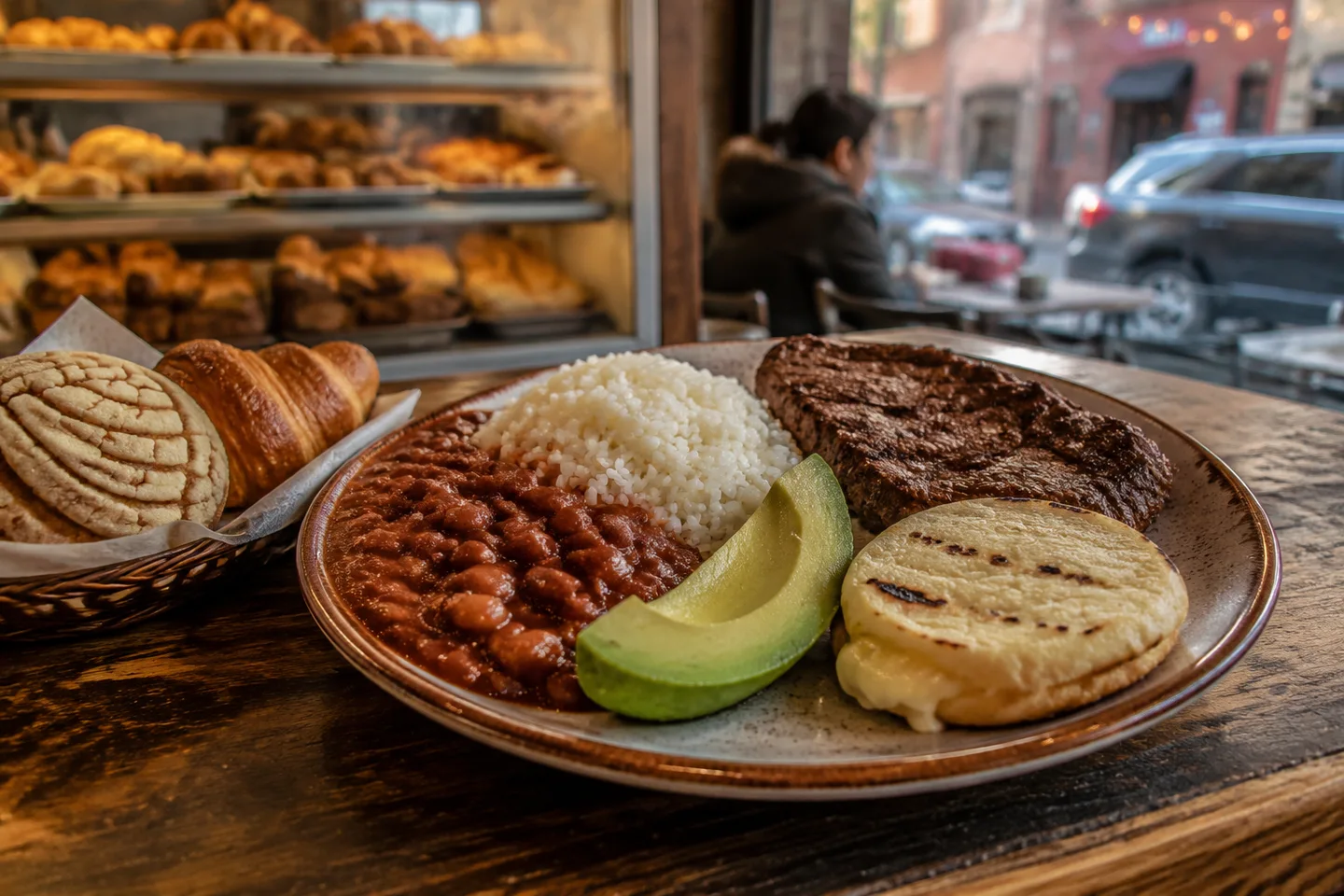
Some places introduce themselves with a reservation platform, a mood board, and a sandwich that costs more than your phone bill. El Parcerito takes another route. The independent Colombian restaurant and bakery at 125 Beach Street tells you the important part right away: there is food here with a real cultural address, and Staten Island is allowed to be part of that conversation.
The business identifies itself as Colombian on its own website and social channels. Its published menu and customer-facing materials reference familiar staples including bandeja paisa, carne asada, and arepas with cheese. That is enough to establish why a curious local eater might make the trip without pretending we sat down, interviewed the owner, or performed a dramatic first bite on cue.
Beach Street deserves a pin on your actual map
Search results have a habit of acting as though serious neighborhood eating ends somewhere between lower Manhattan and the Brooklyn waterfront. It does not. A Colombian restaurant and bakery near Silver Lake, Staten Island belongs to a borough with its own layered food geography, shaped by people who live there rather than by visitors chasing a photogenic afternoon.
El Parcerito lists 125 Beach Street, Staten Island, NY 10304, as its address. The shop publishes weekday hours of 6 a.m. to 10 p.m. and weekend hours of 7 a.m. to 10 p.m. Those schedules can change, especially around holidays, so checking the restaurant’s own website ↗ before leaving home remains more useful than trusting an old screenshot.
Its listed telephone number is 347-466-4902. Calling matters if you need current menu information, allergy guidance, accessibility details, or an answer about whether a particular baked item is available. A bakery case is a living thing, not a guarantee written in permanent marker.
Bandeja paisa comes with cultural context, not a novelty label
Bandeja paisa is associated with Colombia’s Antioquia and broader Paisa region. Versions vary, but the dish commonly brings together rice, beans, meat, plantain, avocado, egg, and an arepa. Some interpretations also include chicharrón. The important detail is that it is a composed regional meal, not simply a pile of ingredients assembled for a social-media stunt.
The restaurant references both a full bandeja and a smaller version in material published through its own site. Availability, preparation, portion size, and price should be confirmed directly. We are not reviewing a plate we have not eaten; we are explaining why the menu points to a meaningful Colombian food tradition.
Arepas deserve the same respect. Across Colombian kitchens they appear in different sizes, preparations, and regional styles. A cheese-filled version can be comforting, substantial, and beautifully straightforward. It can also contain allergens or ingredients that matter to a particular diner, which is another good reason to ask instead of assuming.
Carne asada and bakery offerings add a different rhythm. One person might be planning a full meal. Another might be looking for coffee and something to take away. The value of a restaurant-bakery combination is that it need not insist every customer arrive with the same appetite or schedule.
Independent does not mean invisible
Small food businesses do not become interesting only after somebody from another borough discovers them. They already belong to daily routines: early breakfasts, family lunches, deliveries, conversations in familiar languages, and the practical search for a meal that tastes connected to somewhere.
That does not give a publication permission to invent touching stories about the people behind the counter. We do not know the owner’s personal history, the kitchen’s exact recipes, or what customers say to one another. Unless a real interview happens, those details stay unwritten. The actual business and its own published information are enough to build a useful recommendation.
The broader point is simple: a neighborhood restaurant can expand the city’s understanding of itself without asking to be called a hidden gem. Hidden from whom? People who live nearby may know exactly where the place is. The rest of us might just need a better map.
A sensible first visit starts with a question
Ask what is fresh. Ask which dishes are available that day. Ask whether an arepa includes dairy, whether beans are cooked with meat, or whether a particular sauce contains something you cannot eat. If a large entrée sounds ambitious, check whether a smaller portion is offered.
Look up the route and allow a little room in your schedule. Beach Street is not a theme park, and neighboring homes and businesses deserve the same consideration you would want on your own block. Support the shop if the menu works for you, tip fairly where appropriate, and leave the place better than a content-collecting expedition would.
For more independent food coverage, browse Borough Signal’s Food & Drink stories. You can also explore the wider borough through our Staten Island neighborhood coverage.
El Parcerito is not interesting because we are declaring it the city’s next viral destination. It is interesting because Colombian cooking, bakery culture, and a real Staten Island address make a stronger case for attention than any algorithm pretending the city has only two neighborhoods worth eating in. Bring an appetite, confirm the details, and let the actual place tell you what is available.
Strong Signal
Worth making the trip.
PRIMARY SOURCEEl Parcerito official restaurant website ↗
See something that needs attention? Send a correction. We review factual notes and attach meaningful updates to the article.