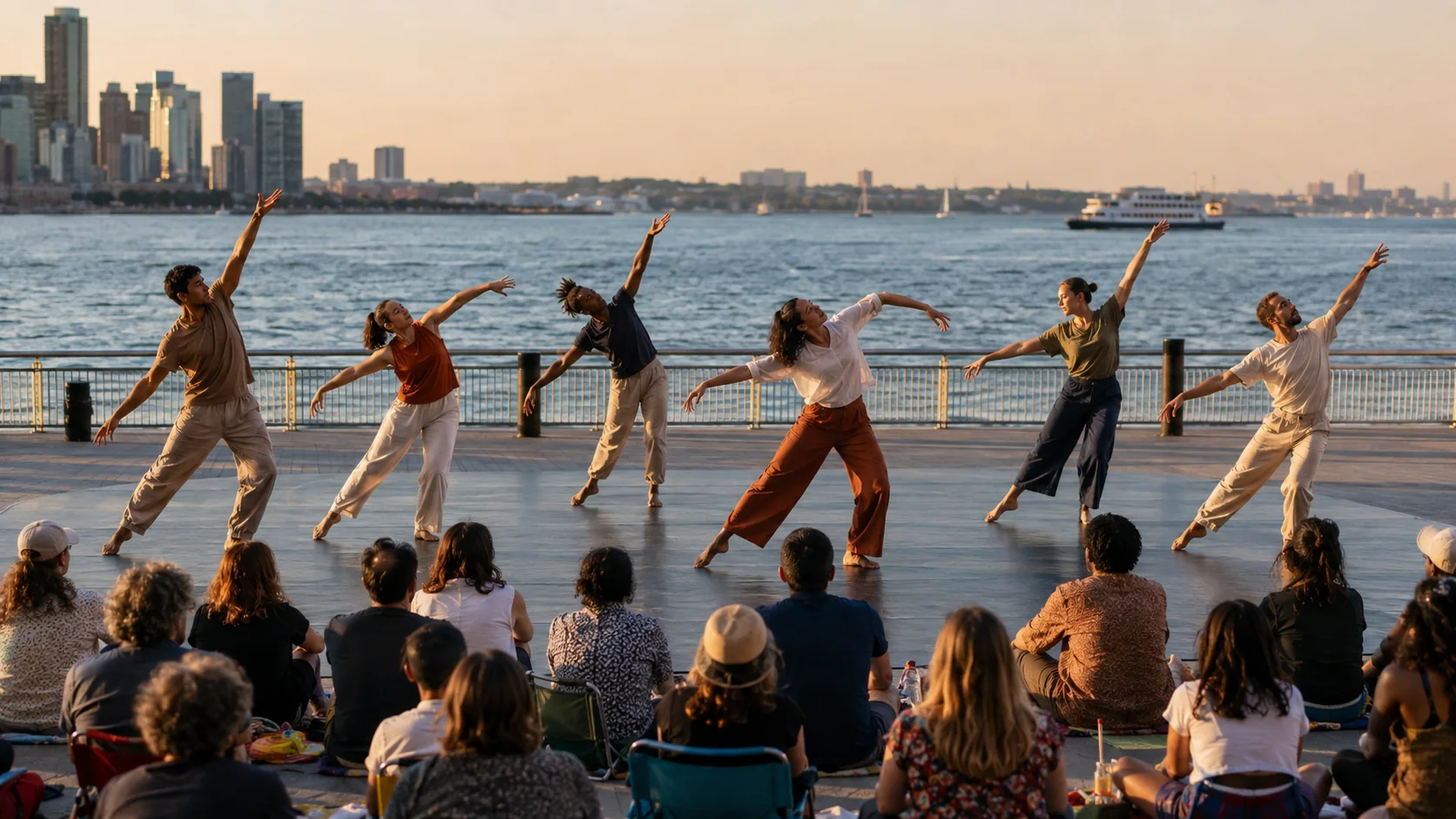
A theater controls the audience’s direction. Seats face one way. Walls contain sound. Light tells the room when to stop looking at itself.
Robert F. Wagner Jr. Park offers almost none of that control. The harbor remains visible. Ferries move. Wind changes costumes and music. People walking along the waterfront may encounter a performance before they understand that a festival is underway.
The 45th Battery Dance Festival is scheduled from August 10 through August 17, 2026, with free outdoor performances and workshops at the park. The August 16 performance was moved to August 17 because of weather, a reminder that outdoor programs remain in conversation with conditions until the final bow.
This guide uses the official festival schedule. It does not claim that Borough Signal attended the 2026 performances. Program details and weather plans should be confirmed through Battery Dance before traveling.
The edge of Manhattan changes the stage
The Battery is an arrival and departure point. Ferries connect Manhattan with other islands and shores. Tourists move toward landmarks. Office workers cross the district. Residents use the waterfront as public space.
Dance enters this movement without fully separating from it. A choreographer may create for a defined performance area, but the background remains active. The city contributes motion that was not rehearsed.
That setting can make a small gesture feel larger because the horizon sits behind it. It can also pull attention away. Outdoor performance accepts the risk.
Free admission changes the audience
Ticketed dance audiences usually choose the event in advance. A free public festival can include dedicated followers, families, workers leaving nearby offices, tourists, students, and people who stop because they hear music.
This mixture creates access and unpredictability. Not everyone knows dance etiquette. Children move. People arrive midway. Applause happens in unfamiliar places.
The performance must hold viewers without relying on the social pressure of an expensive ticket. That is a demanding form of welcome.
International work meets a local park
Battery Dance has a long history of international exchange. Festival programs can place companies and choreographers from different countries within the same evening.
The value is not simply the number of nations represented. A strong program gives work enough context to be understood without reducing artists to cultural samples.
Audiences should read company information, notice distinct movement languages, and resist deciding that one piece represents an entire country.
Workshops move the line between audience and artist
Outdoor workshops allow participants to encounter dance through their own bodies rather than only observation. That can be welcoming for beginners because the setting is less formal than a studio.
Check registration, age, clothing, physical requirements, and accessibility before joining. Follow instructors and adapt movement to your body. A public workshop is not a test of flexibility.
Arrive early enough to hear safety instructions. Do not film other participants without permission.
Weather is a collaborator with veto power
Heat, rain, wind, wet surfaces, and air quality affect dancers more than they affect a seated audience. A stage that appears dry from several yards away may not be safe for movement.
The 2026 schedule change demonstrates why official updates matter. Check the festival site and social channels the day of the event. If a performance moves, accept that artist safety and technical conditions come before convenience.
Bring water, sun protection for early arrival, and a layer for waterfront wind after sunset.
Sound behaves differently outside
Music may compete with aircraft, boats, voices, and city equipment. Sit within the intended area and avoid holding loud conversations during a piece.
For Deaf and hard-of-hearing visitors, dance provides visual information but the event may still rely on spoken introductions or sound cues. Check published access details and contact organizers with specific questions.
Outdoor accessibility also includes surface conditions, seating, restrooms, and routes from transit.
Arriving early is about orientation
Robert F. Wagner Jr. Park has changed through resilience and reconstruction work, and visitors should confirm the current entrance and performance location rather than relying on memory.
Arrive early enough to find the viewing area without crossing the performance space. Ask staff where blankets or chairs belong. Keep accessible sightlines open.
If no formal seating is provided, bring only what the festival permits and place it with awareness of the people behind you.
Dance does not need translation into a plot
Some viewers feel anxious when a dance work does not present a clear story. They search for characters and events because narrative feels like proof of understanding.
Movement can operate through rhythm, weight, repetition, distance, touch, shape, and contrast without becoming a coded play. Notice what changes. Notice how performers share space. Notice the relationship between movement and sound.
It is acceptable to leave with a feeling before an explanation.
Photography can become interference
The harbor and dancers create an obvious image, but an audience member’s desire to capture it should not block someone else or distract performers.
Follow the festival’s current photography policy. Turn off flash. Keep screens low and brightness reduced. Do not enter restricted areas for a cleaner angle.
If professional images become available, supporting and crediting the photographer may produce a better record than a hundred obstructed phone clips.
Support after the free performance
Free public art is not free to produce. Artists train, travel, rehearse, and perform. Staff build schedules, permits, production, communications, and safety plans.
If the work matters to you, learn about the company. Attend another performance. Donate when possible. Share accurate information. Follow artists directly rather than reposting without names.
Attention can become support without becoming ownership.
The city at the final bow
The Battery Dance Festival uses the edge of Manhattan as more than scenery. The location reminds audiences that dance can enter public life without waiting for people to cross a theater threshold.
Confirm the schedule, weather update, time, and location through Battery Dance. Plan transit and waterfront walking. Bring a compact setup and patience for the environment.
When the performance ends, the harbor keeps moving. That continuation is part of the image: the dancers stop, the ferries do not, and the public stage becomes a park again.
Strong Signal
Worth making the trip.
PRIMARY SOURCEBattery Dance Festival ↗
See something that needs attention? Send a correction. We review factual notes and attach meaningful updates to the article.