For more than a century, movies have trained audiences to look across. Television followed. Computer screens followed. Then phones turned upright in millions of hands, and a new kind of story began arranging faces, rooms, movement, and suspense inside a tall, narrow frame.
The first ALZA Festival is scheduled for October 16 through October 18, 2026, at AMC 19th Street East 6 in New York City. The program is dedicated to microdramas and vertical storytelling, with premieres, screenings, conversations, industry gatherings, and a Created in NY showcase connected to the Mayor’s Office of Media and Entertainment.
It would be easy to treat the festival as a novelty. Vertical video is often associated with scrolling, short attention, disposable trends, and advertising. ALZA is making a more ambitious argument: stories designed for phones can deserve the concentration, craft, and public discussion given to work made for larger screens.
The frame changes the grammar
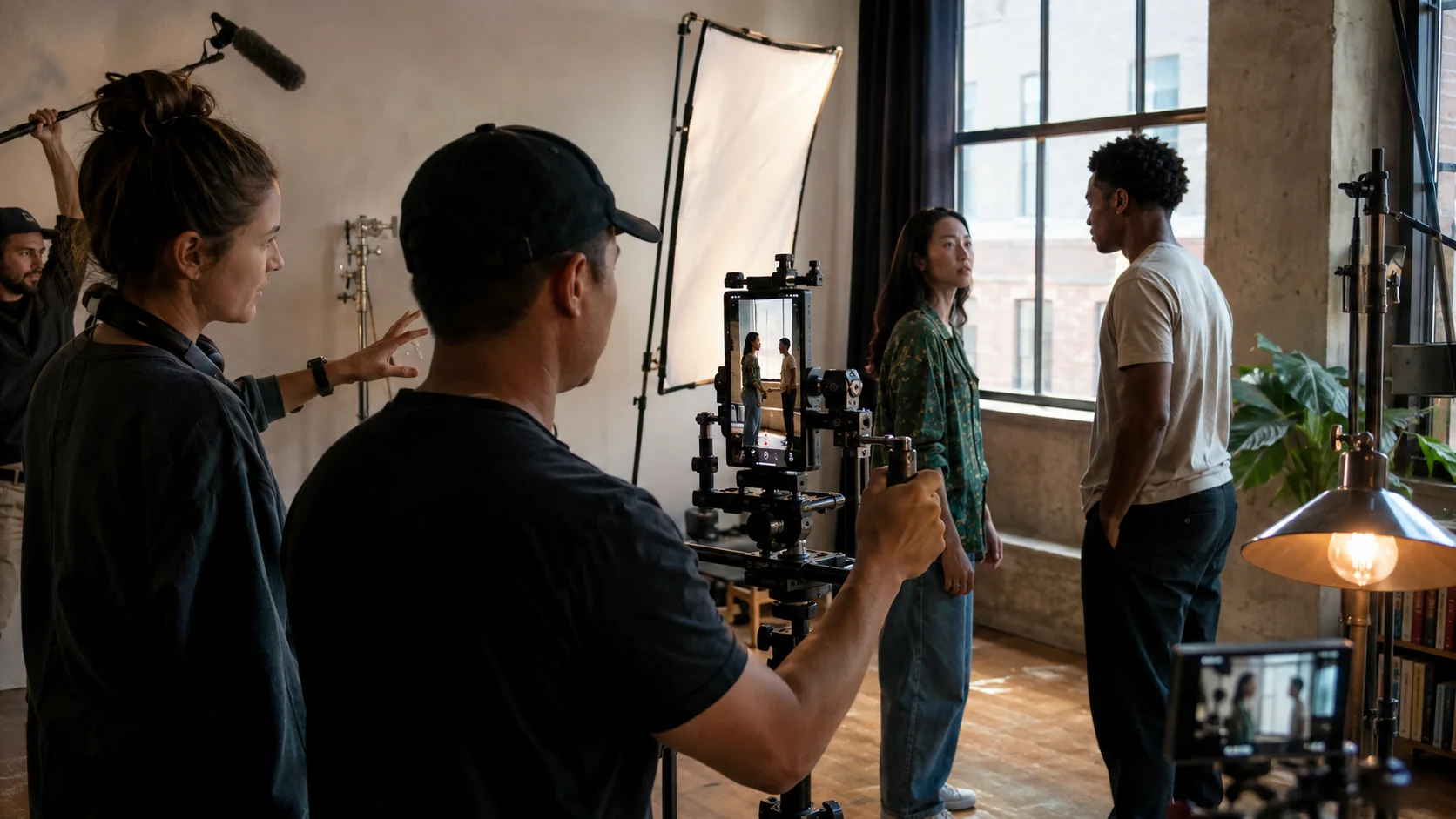
A vertical image is not a horizontal movie with the sides removed. It organizes information differently. A face can dominate the frame. Height becomes useful. Doorways, stairwells, mirrors, apartment interiors, bodies, and stacked layers of action take on new importance.
Two characters standing side by side can be difficult. One character above another can become visually powerful. A filmmaker has less horizontal space for environment, but more opportunity to create intimacy. The audience often holds the screen close enough for a small expression to carry an entire beat.
Poor vertical work ignores these differences and simply crops. Strong vertical work writes with them from the beginning.
Short does not mean simple
Microdramas and microseries often use episodes that last only a few minutes. That length creates pressure. Characters must become legible quickly. A scene needs a reason to continue. The end of an episode frequently carries a revelation, reversal, or unanswered question strong enough to prompt the next tap.
This can produce manipulative storytelling if every moment exists only as bait. It can also produce discipline. A short episode has no room for a scene that repeats information without changing anything.
Writers working in the form must decide how much context can be implied, which detail can stand for a larger world, and when speed destroys emotional weight. The best work will not merely move fast. It will know when to stop.
The theater creates a strange experiment
Vertical stories are usually watched alone, on personal devices, amid messages and other distractions. Screening them in a movie theater changes the social agreement. An audience looks together at work built for individual attention.
That transition raises practical and artistic questions. How is the vertical image presented on a wide screen? Does the empty space become part of the design? Do short episodes play as a sequence? Does suspense work differently when nobody can immediately scroll away?
The festival’s physical setting may be one of its most revealing features. It takes a private viewing habit and makes it public.
New York is a logical place for the argument
The city contains actors, writers, crews, editors, producers, studios, advertisers, social creators, film schools, and audiences accustomed to moving between entertainment forms. A performer may work on a traditional set one week and a mobile-first production the next.
New York apartments also happen to resemble vertical frames. Rooms are narrow. Buildings stack lives above one another. Elevators, fire escapes, subway poles, and tall windows offer natural visual lines. None of this guarantees good work, but the city gives vertical filmmakers useful problems.
The Created in NY showcase could make local production visible if it reaches beyond familiar creator circles and recognizes craft across writing, directing, acting, design, editing, and sound.
The business model needs scrutiny
Microdramas have grown partly because platforms can release episodes quickly, measure viewer behavior, and monetize attention across long serialized arcs. That business can create jobs and new audiences. It can also reward volume, repetition, and cliffhangers designed more for retention than meaning.
A serious festival should be willing to discuss labor conditions, credit, ownership, pay, platform control, and the pressure to produce at speed. Celebrating innovation without asking who benefits would make the conversation incomplete.
Creators should understand the rights attached to submissions and distribution deals. Audiences should know when a series is an artistic project, an advertisement, or both. The vertical frame does not remove old media questions. It gives them a new interface.
Accessibility can be designed, not added later
Phones offer features that can make stories easier to access, including captions, adjustable volume, and close viewing. Yet mobile video often treats captions as decoration, using fast text, poor contrast, or placement that conflicts with platform controls.
Vertical filmmakers can plan for readable captions, audio description, clear dialogue, and visual information that survives on different screen sizes. Festivals can model that standard by publishing access details for screenings and conversations.
If the form claims to meet audiences where they are, accessibility should be part of the claim.
What we will be looking for
Borough Signal will not judge the festival by whether vertical storytelling replaces television or film. It does not need to. New forms rarely erase old ones as cleanly as industry predictions suggest.
We will look for work that understands why it is vertical. We want characters who feel alive beyond the cliffhanger, images composed for the frame, sound that does more than fill silence, and stories that respect the viewer’s time without confusing speed with excitement.
We will also watch how the festival balances established studios with emerging creators. A new festival earns credibility through selection, transparency, and the seriousness of its conversations, not by declaring itself the future.
Before attending ALZA Festival
Confirm the final schedule, ticket information, venue rules, accessibility, and age requirements through the official ALZA Festival website. The announced dates are October 16 through October 18, 2026, at AMC 19th Street East 6. Program details can change as the event approaches.
Attend with an open mind and a functioning critical one. The fact that a story fits a phone does not make it lesser. The fact that a format is new does not make it good.
The most interesting outcome would be a festival that gets past defending the vertical frame and starts arguing about the work inside it. That is when a format begins becoming a culture.
Rising Signal
Worth knowing about as it develops.
PRIMARY SOURCEALZA Festival ↗
See something that needs attention? Send a correction. We review factual notes and attach meaningful updates to the article.