There is an economy that rarely makes the financial pages. It travels in folding tables, protective sleeves, garment racks, carefully packed ceramics, jars of honey, and the private hope that strangers will understand why somebody spent so many hours making one small thing.
At Snug Harbor, Cottage Row Curiosities gives that economy an address.
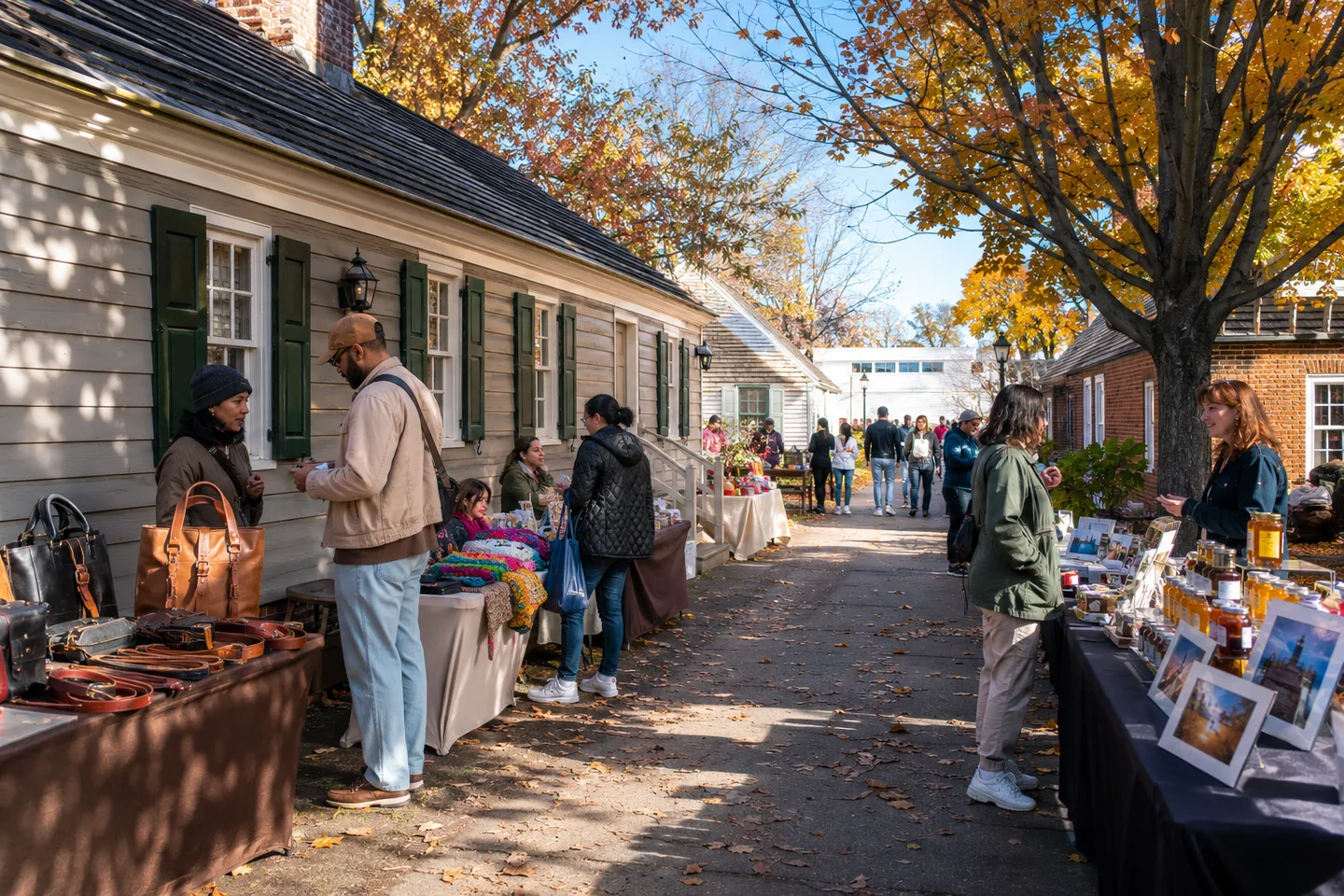
The cultural center describes its community artisan market as featuring more than 40 vendors from Staten Island, alongside food, occasional live pop-up music, and free activities. Entry is free. The things artists and small businesses sell are not, which is an important distinction for anybody who wants local creativity to remain more than a decorative concept.
These are actual businesses, not invented characters
Snug Harbor’s published August vendor list names Fox Den Leathercraft, Jellypeachcrochets, Koltuk’s Honey, Rogelio Ramos Photography, Treasured Soaps and Candles, The Button & Bead Lady, Nicole Sylvia Javorsky Art, and Hey Viv! Vintage, among many others.
The list also includes makers and creative businesses such as Beautiful Evil, Sunset Hill Design, SoapBae LLC, Strange Stitches, Vallegirls Handmade Gems, Tabitha Lee Turchio Photography, and Marcia’s Succulents and Cacti.
Those names come from the organizer’s official Cottage Row Curiosities page ↗. They represent the published August lineup, not a guarantee that every individual seller will appear at a future market. September and October participation may change; verify specific vendors directly before making a special trip.
We have not interviewed these artists or observed their booths firsthand. The goal is to identify the real local businesses credited by the organizer, not to fabricate quotations or emotional origin stories.
A maker market is also a practical lesson in scale
An independent seller may be designer, photographer, bookkeeper, delivery department, customer-service team, and social-media manager all at once. That does not mean every item must fit every budget. It does mean a handmade object cannot be understood solely by comparing its price with a mass-produced listing.
Leatherwork involves materials and finishing. Crochet carries hours inside stitches that can look deceptively simple. A photograph requires equipment, editing, printing, and a point of view. Honey, jewelry, soaps, plants, candles, and vintage garments each come with their own sourcing and care questions.
You can ask those questions respectfully. What materials were used? How should this be cleaned or stored? Is a custom version possible? Are ingredients or fragrances clearly listed? A real conversation can provide more useful information than a rushed declaration that everything is cute.
For anyone seeking a Staten Island handmade artisan market at Snug Harbor, the appeal is not just the number of tables. It is the ability to encounter multiple kinds of neighborhood creative work in one place without pretending they are interchangeable.
The next dates come with useful details
Snug Harbor lists Saturday, September 12, 2026, from noon to 5 p.m., with a September 13 rain date. It also lists Saturday, October 10, from 2 to 7 p.m., with an October 11 rain date.
The location is Cottage Row at 1000 Richmond Terrace, Staten Island, NY 10301. Admission to the market itself is free. Vendor merchandise, food, beverages, and other optional purchases carry their own prices.
The organizer names Harbor Eats and Egger’s Original Ice Cream Parlor among its onsite food-and-drink options. Menus, opening times, accessibility, vendor schedules, and weather-related changes should be checked directly before arriving.
There is no need to arrive with the exhausting mission of meeting all 40-plus businesses. Pick a few categories that genuinely interest you. Ask permission before photographing a maker’s work. Remember that a seller may be balancing a transaction while answering questions.
Local support can look quieter than a viral post
Buying something is direct support when your budget allows it. Sharing a maker’s actual business name, following their confirmed channels, or recommending them accurately can help too. What does not help is demanding free work in exchange for exposure or treating artists as an endless source of picturesque content.
The point of a community market is not to prove that every visitor will find a life-changing object. It is to make visible the creative labor already happening in the borough: work that exists between jobs, inside home studios, around family schedules, and through business models too small to command a national advertising campaign.
Staten Island does not lack makers. It sometimes lacks the attention that allows their names to circulate beyond familiar blocks.
Leave with a name, not just a shopping bag
If something catches your eye, remember who made it. Check whether they sell online, take commissions, appear at other markets, or offer another way to stay connected. A creative business becomes easier to support when it is allowed to remain a specific business rather than dissolving into the phrase local vendors.
Explore more stories about the people shaping New York, browse Staten Island neighborhood coverage, and check verified event listings for the current market details.
Cottage Row is not magic. It is something more practical: a place where the borough’s artists, sellers, and small creative businesses can show up under their own names. Paying attention is the first useful form of support.
See something that needs attention? Send a correction. We review factual notes and attach meaningful updates to the article.