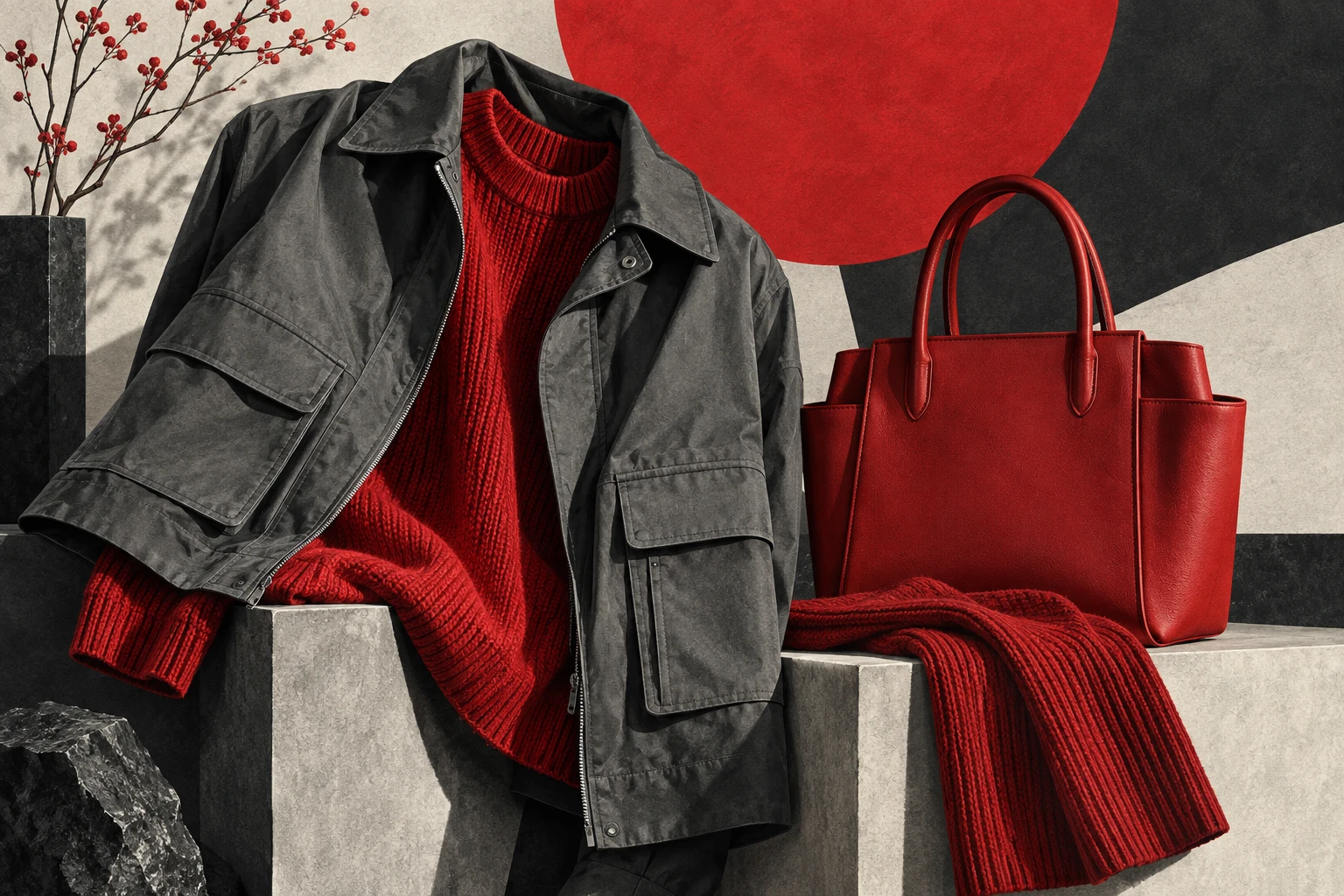
The jacket looked excellent by the front door. Its second look, folded badly over your forearm while you try to do three other things, deserves consideration too.
September dressing invites a particular kind of wishful thinking. A person can be emotionally ready for outerwear long before the whole day cooperates. This is not a forecast for the week. It is a styling problem worth solving before an attractive layer becomes a piece of luggage.
Start with the outfit underneath. If taking off the jacket makes the whole thing feel unfinished, the jacket is doing too much work. A shirt, trousers and whatever footwear suits your day should have a relationship of their own. The extra layer can change the shape without holding the entire argument together.
The under-outfit gets a vote
An easy test is to get dressed without the outer layer and look at the proportions. Notice where the top ends, how much of the waistband is visible and whether the colors feel intentional together. None of this requires a new purchase. It requires looking at the parts normally hidden by the most dramatic item.
Try a quieter base with one clear contrast. Graphite and a small amount of red can work. So can two neighboring tones with a difference in texture. This is a styling suggestion, not a declaration that a particular combination is suddenly compulsory for fall.
The useful question is whether you like the result while sitting, reaching and carrying your usual things. An outfit only needs to flatter you according to your own preferences, but it should not make ordinary movement feel like a threat to its composition. If a hem needs adjusting every two minutes, it may not be the right partner for this day.
Pockets are part of the silhouette
Try the pockets with something inside them. Empty pockets are persuasive. Loaded pockets tell the truth about the shape.
A phone can drag one side of a light jacket down. A bunch of keys can make a clean line look lumpy. That does not make the garment bad. It means the things you carry belong in the fitting-room conversation, even when the fitting room is your bedroom.
Decide what stays on your body and what belongs in a bag. If you often remove the jacket, avoid making it the only home for everything essential. The aim is not an elaborate packing system. It is reducing the number of times you have to search three different layers for the same object.
Sleeves matter for a similar reason. A thin sleeve that moves easily under a jacket may be a better choice than a bulky knit you love on its own. Two appealing garments are not automatically good coworkers. Put them on together and give them a short trial involving something less dignified than standing still.
A layer should be able to leave gracefully
Consider where the removed item goes. Can it fit in the bag without displacing everything? Does it crease in a way you enjoy or one you will resent? Can it rest across your lap comfortably? These are personal preferences, not standards a stranger gets to enforce.
If the answer is always that somebody must carry it, choose knowingly. There are occasions when an inconvenient jacket is worth it. A beautiful piece can be allowed a little drama. It just should not surprise you with its demands on a routine afternoon.
The same applies to buying for an imagined version of your schedule. Someone with a coat hook beside a desk has different options from someone moving between appointments all day. A photograph does not show the difference, but a useful wardrobe needs to account for it.
For the next mild-weather outing, try changing only the base layer or the way you carry the jacket you already own. Leave the rest alone. You may discover that the missing fall purchase was actually a place to put your sleeves.
This is original Borough Signal styling commentary, not a runway report or product test. The accompanying image is an original concept illustration and does not identify commercial products.
See something that needs attention? Send a correction. We review factual notes and attach meaningful updates to the article.