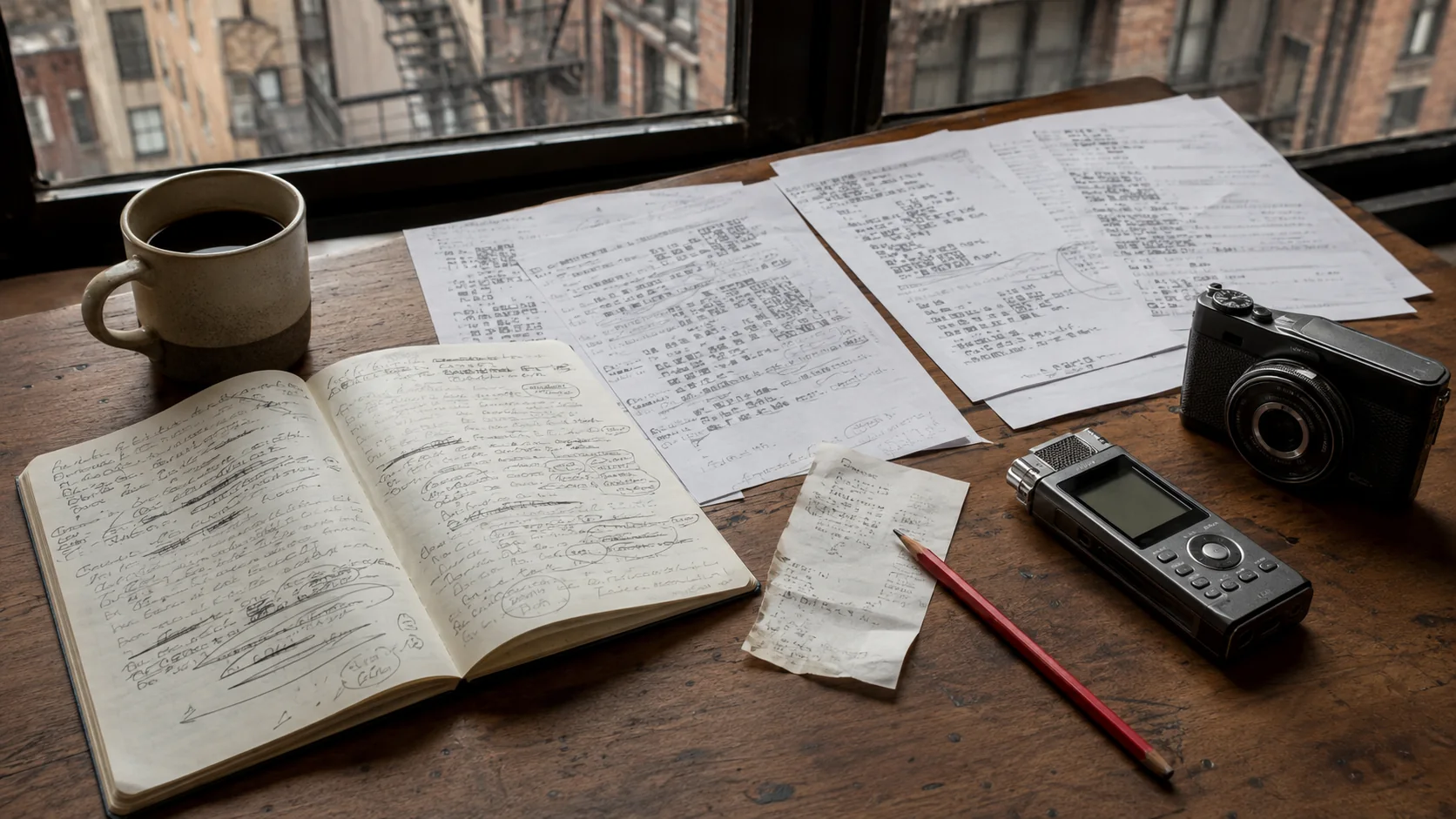
A publication earns a recognizable point of view by saying yes carefully and no often. New York produces more openings, launches, menus, shows, pop-ups, personalities, and events than Borough Signal could cover, even if publishing quickly were the only goal.
It is not the goal.
Borough Signal exists to identify New York worth noticing without pretending that every crowded room is important. That requires standards readers can see. It also requires limits on what writers are allowed to claim.
These are the tests behind our coverage. They apply to Mina Rhue, Raina Maddox, John Sori, future contributors, editors, and commercial partners. A polished page does not excuse weak reporting, and a recognizable byline never removes accountability.
Test one: Is there a real reason to care?
New is not a reason by itself. Expensive is not a reason. Photogenic is not a reason. A long line may be evidence of demand, marketing, limited capacity, curiosity, or nothing more lasting than a weekend trend.
A story should offer at least one meaningful signal. It may reveal a larger city change, introduce work with a distinctive point of view, provide useful information, document a neighborhood institution, explain an emerging form, or help readers make a better decision.
If the only argument is that people online are talking about it, the story needs more reporting.
Test two: Do we know this firsthand?
Borough Signal separates Field Signal from Signal Desk.
Field Signal means a contributor actually visited the place, attended the event, saw the exhibition, watched the performance, ate the meal, or conducted the interview being described. The article should record a visit date when relevant. Firsthand reporting does not make the writer automatically correct, but it allows specific observation.
Signal Desk means the story was researched through trustworthy sources without claiming personal experience. A Signal Desk writer may explain dates, history, context, location, policy, and publicly documented information. They may not write “we tried,” “we saw,” or “the room felt” when they did not.
The label is a promise, not decoration.
Test three: Are the facts tied to useful sources?
Time-sensitive information should come from primary sources whenever possible. Event dates come from organizers. Transit changes come from transportation agencies. Public-program details come from the responsible city department. Ticket rules come from the venue or seller.
Outside reporting can add context, but Borough Signal will not copy another publication’s language or disguise a rewrite as original work. A source link is not only proof. It helps readers act after the article.
If reliable sources conflict, the story should say so or wait.
Test four: Does the writer sound like a person?
Every contributor should have a recognizable rhythm. Mina notices style, beauty, and the visual details of ordinary life. Raina follows neighborhoods, culture, and people through thoughtful storytelling. John brings a direct, city-smart perspective to food, technology, and events.
They should not share a generic introduction, identical headings, or the same conclusion with nouns swapped out. They should not use borrowed intimacy, pretending the reader is a friend after two sentences. They should not fill space with phrases that sound polished but say nothing.
Clarity matters more than performance. A short sentence is allowed. So is disagreement.
Test five: Is the recommendation useful?
Praise should help a reader understand fit. “Amazing” tells very little. A useful recommendation explains what worked, who may value it, what it costs, what the experience requires, and where the limits are.
Criticism should be fair and specific. Writers can describe disappointing service, weak execution, poor value, confusing access, or claims that do not hold up. They should not become cruel, mock workers, or turn one correctable problem into a declaration that a business deserves to fail.
The goal is judgment with evidence.
Test six: Has Signal Strength been earned?
Signal Strength has four levels.
Faint Signal means something is interesting but still developing. Rising Signal means it is worth knowing about. Strong Signal means it may be worth making the trip. City Signal is reserved for something especially memorable or important.
Not every article needs a rating. Researched previews generally should not receive the strongest judgment without experience. City Signal must remain uncommon or the term becomes meaningless.
An advertiser, affiliate partner, free product, or event host cannot purchase a rating.
Test seven: Are commercial relationships visible?
Sponsored content must be labeled clearly. Affiliate links must be disclosed and use appropriate attributes. Complimentary meals, tickets, products, or access should be disclosed when they materially relate to coverage.
An invitation does not guarantee an article. A free experience does not guarantee a positive one. A business that declines advertising must not receive worse editorial treatment.
Editorial and commercial work may support the same publication, but they cannot secretly become the same decision.
Test eight: Are people protected from unnecessary exposure?
Borough Signal protects private addresses, family information, personal accounts, and private contact details. Those details do not belong on public pages unless legitimately required and intentionally disclosed.
The same care applies to sources and community members. We ask before making an identifiable person the subject of a photograph or profile. We do not publish private information because it is technically discoverable.
Public-interest reporting may require difficult decisions, but curiosity alone is not public interest.
Test nine: Can the story be corrected?
Mistakes happen. Hiding them damages trust more than acknowledging them.
Meaningful factual corrections receive a visible note explaining what changed. New information may receive an update. Minor spelling fixes that do not change meaning may be made without a formal notice.
We do not backdate a story to suggest earlier knowledge or attendance. Publication and updated dates should reflect reality. Readers can submit correction requests with evidence through the Corrections page.
Test ten: Would the story still deserve to exist without search traffic?
Search visibility matters because readers need to find the work. We use descriptive titles, specific meta descriptions, clear headings, internal links, author pages, and Article structured data. We write the words people use when those words are accurate.
We do not publish thin variations of the same story to capture slightly different searches. We do not stuff keywords. We do not create 25 articles that sound like one article wearing different clothes.
The final test is simple: if a reader arrived directly, would the story teach, clarify, document, or delight? Would it be worth saving even if an algorithm never rewarded it?
If the answer is no, it is not a Borough Signal yet.
City Signal
Something especially memorable or important to the city.
See something that needs attention? Send a correction. We review factual notes and attach meaningful updates to the article.