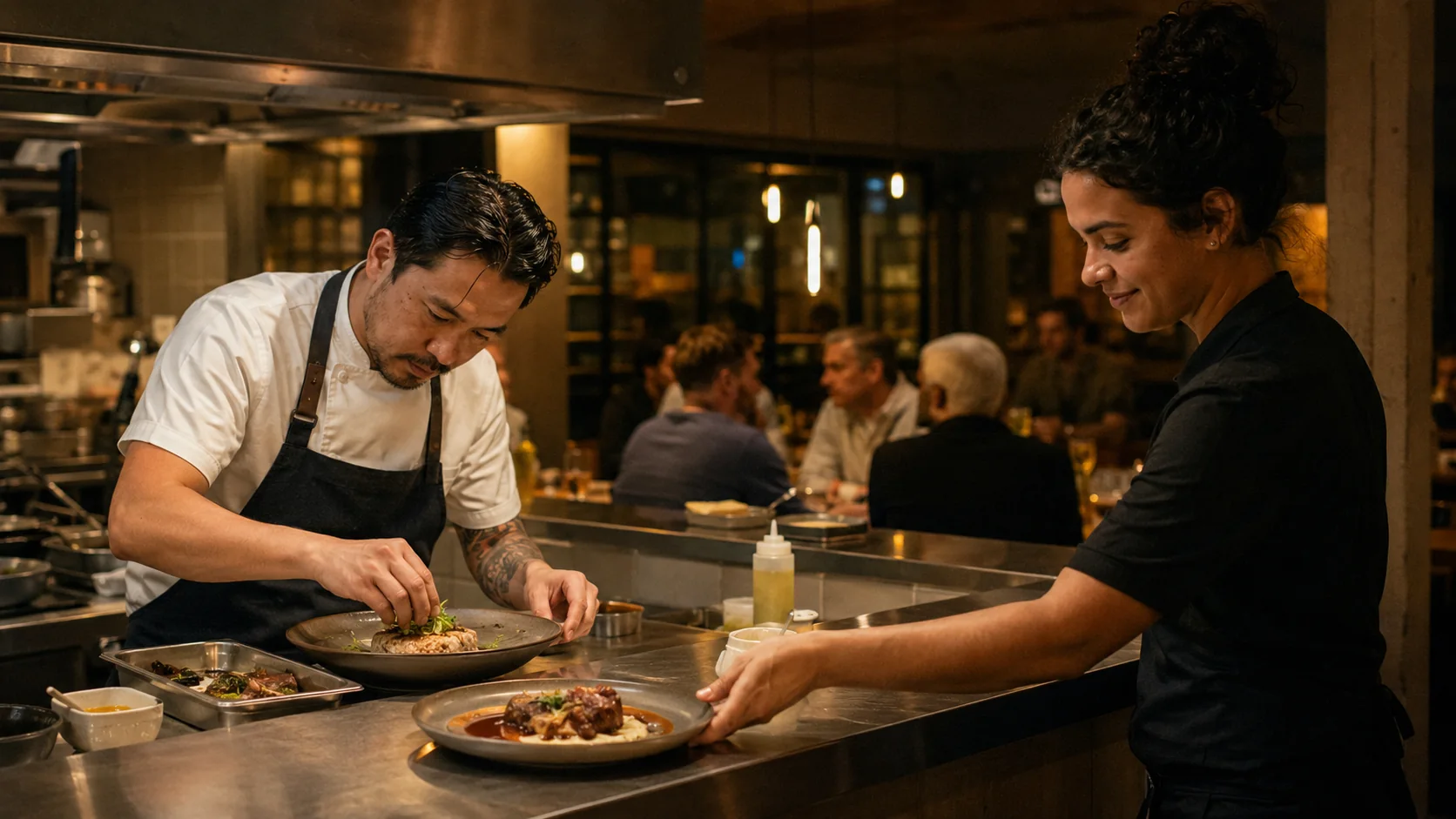
New restaurants arrive with a built-in headline. The doors opened. The chef has a résumé. The room has expensive lighting. A publicist has supplied three phrases that appear everywhere by Friday.
None of that tells us whether the restaurant is worth discussing after the opening week.
A new NYC restaurant deserves attention when it offers more than novelty. The food may express a clear idea. The service may solve difficult problems gracefully. The business may add something useful to its neighborhood. The price may make sense for the work. Most important, the experience may give a customer a reason to return without the presence of a camera.
This is Borough Signal’s evaluation philosophy, not a review of a specific restaurant.
Start with what the restaurant says it is
Before judging execution, identify the promise. Is this a neighborhood dining room, tasting-menu destination, fast-casual lunch spot, bakery, bar with serious food, or event-driven concept?
A casual counter should not lose points for lacking white-tablecloth service. An expensive restaurant cannot use a relaxed identity to excuse poor pacing or unclear hospitality.
The concept sets expectations. Marketing should not be allowed to keep changing those expectations whenever criticism arrives.
Food needs a point of view and control
Originality does not require an ingredient nobody has seen. It can come from precision, restraint, regional specificity, a personal combination of influences, or exceptional execution of something familiar.
A menu should feel chosen. Too many unrelated ideas can suggest fear that one identity will not attract enough people. A small menu can be confident or simply limited. The food decides.
Reviews should describe texture, temperature, seasoning, balance, portion, and consistency with enough specificity that a reader understands the judgment.
Service is not personality theater
Warm service does not require every employee to become the customer’s friend. It requires attention, knowledge, communication, and recovery when something goes wrong.
Can staff explain the menu without reciting a speech? Are allergies handled carefully? Do guests know when a delay is happening? Does the check arrive without a long search? Are workers being asked to perform casual joy while visibly overwhelmed?
One mistake is not a complete service culture. Patterns matter.
Price must be discussed honestly
Restaurant prices reflect rent, wages, ingredients, equipment, insurance, utilities, waste, and many other costs. “Too expensive” is not analysis by itself.
Value asks what the price delivers. A small portion may use exceptional ingredients and labor. It may also be small because the business believes presentation will distract from hunger.
Coverage should list real prices when current, explain portion context, and avoid acting shocked that running a New York restaurant costs money. It should also refuse to call every premium price justified.
The neighborhood is not branding material
Restaurants often borrow identity from an address. A neighborhood name enters the press release even when the business has little relationship with local residents.
Look at operating hours, price range, hiring, suppliers, community relationships, and the previous use of the space. Does the restaurant serve people nearby at any point in the week, or only destination diners arriving by car and app?
No business must solve every neighborhood need. It should not use local character as decoration while behaving as if the neighborhood begins inside its door.
Design should help people eat
Beautiful rooms matter. Lighting, sound, seating, table spacing, temperature, restrooms, and accessibility shape a meal.
Design fails when diners cannot read the menu, hear one another, move between tables, or use the restroom comfortably. A chair chosen for a photograph may become punishment during a two-hour dinner.
Reviews should look beyond color and materials. A restaurant is a working room.
Opening-week problems need proportion
New restaurants require time to settle. Staff learn the room. The kitchen adjusts timing. Equipment behaves badly. Demand differs from projections.
That does not mean early customers should accept unsafe food, disrespect, or a bill that fails to match what was served. It does mean reviewers should distinguish a correctable opening issue from a concept-level problem.
Borough Signal will identify the visit date. A review is a record of a particular experience, not an eternal sentence.
Complimentary access changes disclosure, not honesty
If Borough Signal accepts a meal, invitation, or event access, the article will disclose it when relevant. The restaurant does not buy the conclusion.
Anonymous visits may provide a more typical experience, but they are not always possible. What matters is telling readers the conditions under which reporting occurred.
No complimentary experience can produce an automatic Strong Signal or City Signal rating.
Labor belongs in the restaurant story
The dining room’s ease is created through work customers rarely see. Prep, dishwashing, cleaning, scheduling, sourcing, maintenance, delivery, and emotional labor support every plate.
A review cannot investigate an entire workplace from one meal. It can avoid praising exploitative mythology. Exhaustion is not proof of passion. Chaos is not authenticity. A famous chef is not the only person responsible for the food.
When credible labor issues are part of the public record, they should not be ignored because the dining room looks good.
Repeat value is the strongest test
The opening crowd will visit almost anything once. A restaurant becomes part of the city when people return for reasons deeper than scarcity.
Would the meal make sense without the launch energy? Is there a dish a customer wants again rather than merely wants to post? Can the service maintain quality when the room is ordinary and half full? Does the price allow the intended audience to return?
Not every destination restaurant depends on frequent regulars. Even then, it should leave a memory more substantial than having secured the reservation.
Before everyone knows
Borough Signal’s Before Everyone Knows franchise is not a race to crown the next difficult table. Early coverage should identify promise and uncertainty together.
We may call something a Rising Signal while the kitchen develops. We may wait. We may decide the most responsible story is no story yet.
A new restaurant is not interesting because it is new. It becomes interesting when the choices inside it are clear, the experience supports the claim, and the city would lose something specific if it disappeared.
See something that needs attention? Send a correction. We review factual notes and attach meaningful updates to the article.