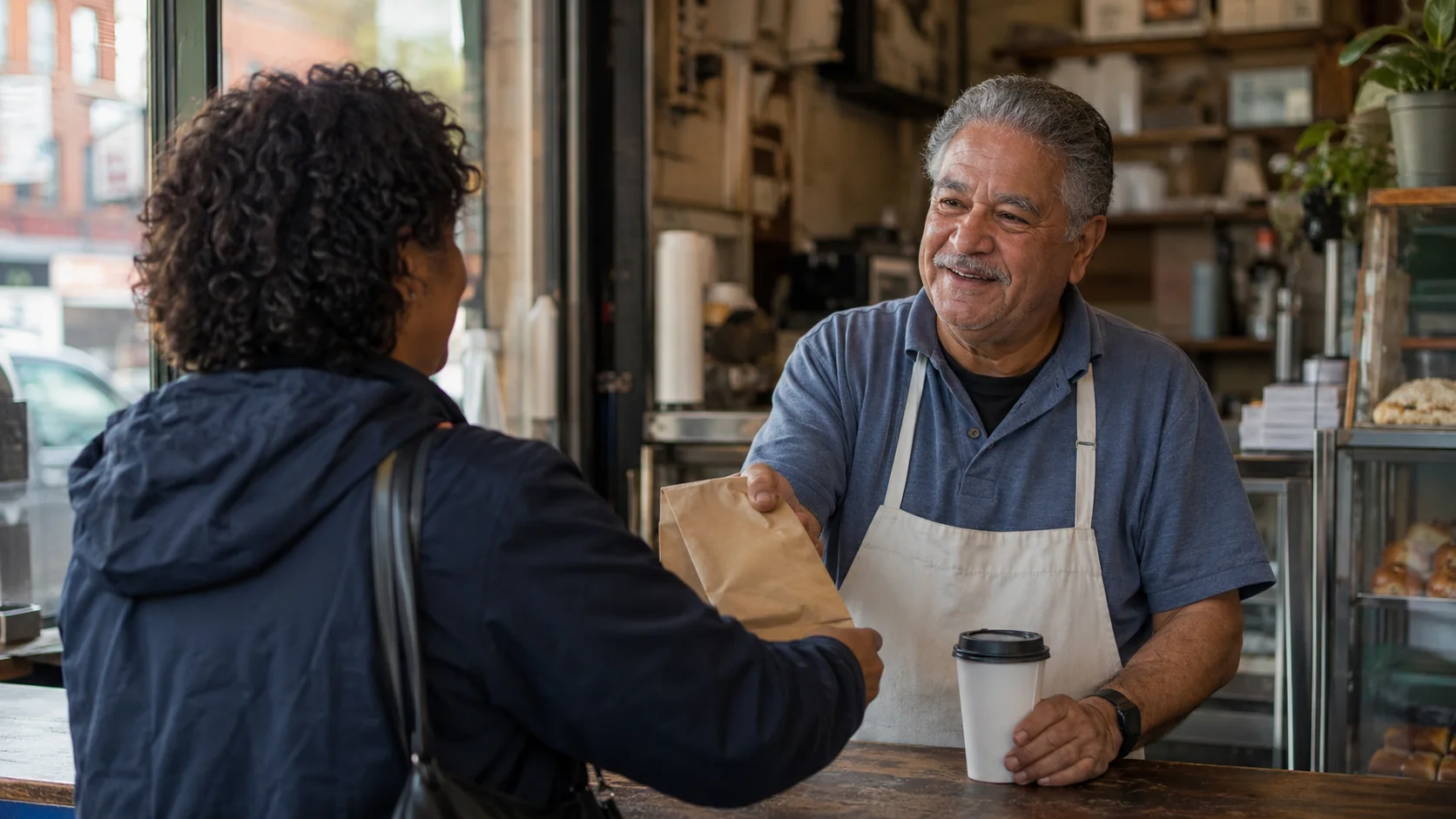
A counter is a border and a meeting place. On one side, someone is working. On the other, someone needs a coffee, a prescription, a repaired watch, a set of keys, a sandwich, flowers, a money order, a bus ticket, or an answer to a question they could probably have searched online.
New York neighborhood businesses are often described through products. The better story is the relationship formed by repetition. A worker notices when a regular changes an order. A pharmacist explains the same instruction with patience. A deli employee begins preparing breakfast before the customer reaches the register. A shop owner knows which building receives packages when a buzzer is broken.
These moments can sound sentimental from a distance. Up close, they are also labor. Recognition requires attention, and attention is difficult when a line is long, rent is due, and the person being charming to customers has already been standing for eight hours.
Familiarity is built one transaction at a time
Neighborhood trust rarely arrives as a dramatic gesture. It accumulates. A customer returns because the service was reliable. The worker remembers a detail. The customer learns the quiet rules of the place. Over time, the transaction becomes easier because both people know what to expect.
That familiarity can make a city of millions feel smaller. It does not mean the worker and customer are friends, and it should not create entitlement. Knowing someone’s order is not permission to demand emotional availability or special treatment.
The relationship works best when recognition moves both ways. Customers should remember that the person behind the counter has a name, a schedule, and a life beyond the service.
Counter workers hold practical information
Small businesses often become informal information points. Someone asks whether the bus has been rerouted, where to find a notary, which laundromat stays open late, or whether the new restaurant is busy. Workers hear fragments of neighborhood news all day.
This does not make every rumor accurate. It does mean a counter can reveal what people are worried about, celebrating, or trying to solve. A good reporter listens without treating workers as free research assistants.
Interviews should be requested at a reasonable time. A person serving a line of customers cannot also provide a thoughtful account of neighborhood change. Buying something does not purchase their story.
The performance of patience
Service work requires emotional control. A worker may be expected to remain calm while a customer is impatient, confused, rude, frightened, or simply having a bad day. That expectation is often described as personality rather than skill.
The best counter workers read situations quickly. They know when to explain, when to move faster, when to ask for help, and when a conflict may become unsafe. Multilingual workers may switch languages repeatedly. Some handle cash, regulated products, private health information, or deliveries while keeping the line moving.
Calling this work unskilled ignores what the work demands.
Small businesses absorb neighborhood change early
A store notices change through sales before a trend report arrives. Different items move. Delivery volume rises. Regulars disappear. New customers ask for products the owner has never carried. Suppliers raise prices. A nearby construction project changes foot traffic.
Workers behind the counter experience these shifts directly. They may benefit from new demand while worrying about rent. They may serve a changing population while trying not to lose the customers who sustained the business for years.
Coverage should avoid forcing owners into a simple position for or against change. Survival can require adaptation, and adaptation can carry loss.
The counter can be a safety net
In some neighborhoods, a trusted business helps in small emergencies. A worker keeps a package from sitting outside. Someone allows a child to wait inside. A shop has a phone charger, a restroom policy with room for judgment, or the number of a local service.
These acts matter, but they should not be romanticized into an expectation that businesses replace public services. Owners and workers cannot be responsible for every need around them. Their generosity often happens despite limited resources.
The city should value that social role without using it as an excuse to leave communities unsupported.
Technology changes the distance
Self-checkout, delivery apps, online ordering, kiosks, and contactless payment can make transactions faster. They can also reduce conversation and move power toward platforms that charge businesses fees.
Many customers appreciate convenience, especially people with limited time or mobility. Workers may appreciate tools that reduce repetitive tasks. The question is not whether technology is good or bad. It is what happens to the relationship when the interface stands between the business and the customer.
An order placed through an app may reach the same kitchen without giving the restaurant a way to know the customer who placed it.
Respect is visible in small behavior
Learn the ordering system before reaching the front. End a phone call when speaking to someone. Do not record workers without permission. Read posted policies. If a mistake happens, ask for a solution without turning the counter into a stage.
Tip where tipping is customary and possible, but do not use a tip to excuse disrespect. If a business provides years of reliable service, recommend it with accurate details. If it closes, do not write as if you were its greatest supporter if you rarely spent money there.
Neighborhood businesses need customers more than nostalgic comments after the lease is lost.
The story requires consent
Borough Signal will not invent a composite shopkeeper or place words in a worker’s mouth to make this essay feel reported. A future Signal People profile must come from an actual interview, with the subject understanding how their words and public professional name will appear.
Not every person behind a counter wants visibility. Some use private identities for good reasons. A publication can honor the role without exposing personal information.
That distinction is central to Borough Signal, which respects the privacy of everyone involved in a story.
What the city loses when the counter goes dark
When a neighborhood business closes, the loss is not automatically tragic. Some businesses are poorly run. Some owners retire. Some spaces become something useful. Cities change.
Still, a closing can erase a network of small recognitions. The customer must explain the order again somewhere else. The package has no familiar landing place. A worker’s memory of the block disperses. The storefront may be replaced, but the accumulated relationship is not transferable with the lease.
That is why the people behind the counter are often the best part of New York. They do not perform the city for visitors. They help residents complete the day. In a place built from constant movement, they are among the people who notice when someone returns.
See something that needs attention? Send a correction. We review factual notes and attach meaningful updates to the article.