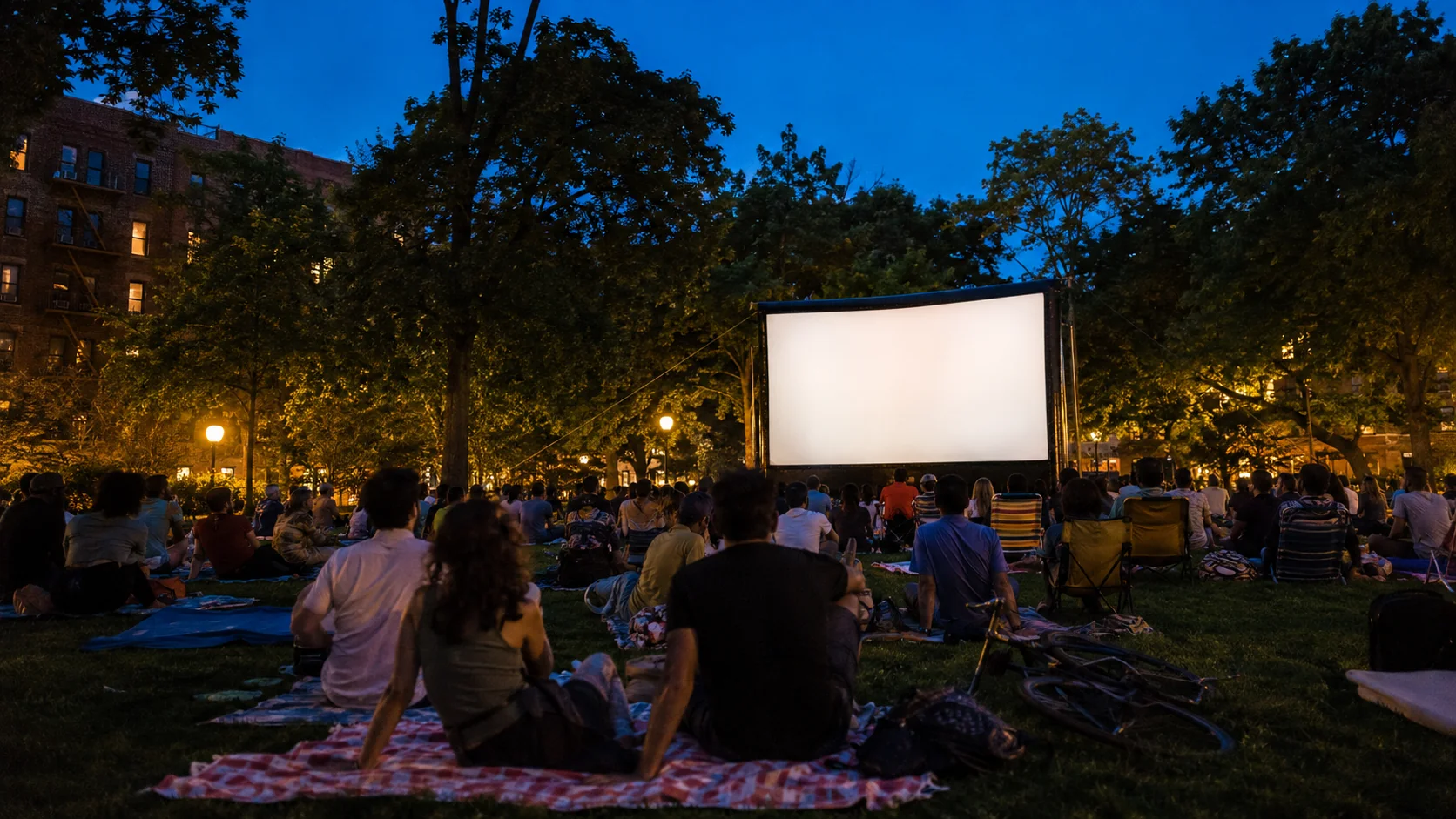
An outdoor movie in New York begins before the image appears. A crew tests sound. Families arrange blankets. Someone unfolds a chair that may or may not meet the posted rules. Children run through the future front row. The sky holds enough light to make everyone wonder whether the announced start time was optimistic.
Then the screen brightens, the park grows quieter, and a public space becomes a theater without walls.
NYC outdoor movies are programmed across parks and other public spaces, including events connected to city agencies and local organizations. Schedules, films, weather policies, and accessibility vary by event. The official listing is the source to check before leaving home.
The appeal is obvious: many screenings are free, the setting is social, and familiar movies feel different under an open sky. The difficulties are equally real. Sound travels, weather changes, seating is improvised, and the city does not stop making noise because the opening credits begin.
The location changes the film
A movie shown near the waterfront gathers river sound and wind. A neighborhood park brings basketballs, dogs, traffic, and people passing through. A skyline behind the screen can compete with the cinematography.
These are not technical failures. They are part of outdoor viewing. The audience trades perfect control for place.
Choose the event partly for the location. A film you already know may be ideal because missing one line does not destroy the plot. A quiet, dialogue-heavy drama may require a strong sound setup and a patient crowd.
Official schedules can change late
Rain, high wind, poor air quality, wet ground, equipment trouble, or park conditions can postpone or cancel a screening. A weather icon on a phone does not determine the organizer’s decision.
Check the official page and social updates the day of the event, then again before traveling. Look for a rain date or cancellation method. Do not rely on an old event listing copied by another calendar.
If no update appears, contact the organizer rather than assuming the screening continues.
Arrival time is a seating decision
Popular screenings attract early crowds. The best arrival time depends on the park, expected audience, seating area, and how important the view is to you.
Arriving early creates waiting time. Bring something quiet to do and enough food or water within event rules. Do not spread a blanket large enough for ten people when two are present.
Late arrivals should move carefully. Walking across the projection path or standing in front of seated viewers is a dramatic entrance nobody requested.
Chairs create a height problem
Some events allow low chairs, some designate chair areas, and others prefer blankets. Check the rule. A standard camping chair in the front can block several people behind it.
If chairs are allowed without assigned areas, sit farther back. Keep aisles and accessible viewing spaces clear. Do not attach tall objects that interfere with sightlines.
Comfort matters, but public viewing requires seeing the crowd as part of the room.
Sound is the fragile element
Outdoor projection can create a large image. Clear sound is harder. Wind carries dialogue away. Traffic interrupts. A generator hums. Audience conversation travels.
Sit within the intended viewing zone and near a speaker when hearing is a concern, while respecting volume and access. Look for caption information. Captions benefit Deaf and hard-of-hearing viewers, people learning English, and anyone trying to follow dialogue through city noise.
An event listing should state whether open captions, assistive listening, or other access features are available.
Bring less than the fantasy suggests
The ideal outdoor-movie setup online includes pillows, elaborate food, lights, baskets, and coordinated blankets. Carrying that arrangement through a subway station feels different.
Bring a blanket or permitted chair, water, a light layer, simple food if allowed, insect protection when needed, and a bag for waste. A portable phone battery can help with the trip home.
Glass, alcohol, grills, candles, and large equipment may be prohibited. Park and event rules control.
Food should not become a second event
A picnic can improve the night. It can also create smells, spills, packaging noise, and trash. Choose food that is easy to carry and eat in low light.
Support nearby businesses when practical, but do not overwhelm a small shop five minutes before the film. Order ahead if available. Keep delivery workers out of crowded seating zones by meeting at a clear location.
Pack out everything you bring. Free entertainment does not include free cleanup by someone else.
Families need an exit plan
Outdoor movies are appealing for children because movement feels less restricted than in a theater. That freedom needs boundaries once the park becomes dark and crowded.
Choose a meeting point. Add identification and a caregiver number for young children. Bring layers, water, and anything needed for the return trip. Sit where leaving early will not require crossing the entire audience.
A child who has had enough is not failing movie night. Leave.
The neighborhood is still using the park
Not everyone present came for the film. Residents may be walking home, exercising, using another facility, or passing through a space they use every day.
Do not treat the event footprint as ownership of the entire park. Keep paths open. Follow restroom rules. Lower voices near residences after the screening.
Public culture works when an event joins a place without pretending the place was empty.
The crowd makes a new soundtrack
Comedy gets larger outdoors. Musical numbers attract applause. Familiar lines may be repeated. Children ask questions at full volume.
Some participation is the pleasure of communal viewing. Constant conversation is not. Keep side discussions quiet and brief. Silence phone alerts. Never record the screen.
If someone nearby is disruptive, use event staff when available instead of escalating a conflict in the dark.
Getting home is part of the plan
Screenings begin after sunset and may end when transit service is less frequent. Check running time and route home. A two-hour film plus introductions can turn an early evening event into a late arrival.
Walk with others where practical. Use well-lit exits. Confirm subway or bus changes before the credits.
The final scene should not be followed by 40 minutes discovering that the planned station entrance is closed.
Why the format survives
Outdoor movies are imperfect. That is not a secret organizers need to solve completely. The format survives because it gives a neighborhood a shared evening with a low barrier to entry.
A park, a projector, and a film can create temporary attention among strangers. People laugh together, recognize a familiar image, and look up to find the real city beyond the screen.
Confirm the official schedule, bring a practical setup, and accept that an ambulance, airplane, or sudden breeze may enter the movie. New York after dark never belongs only to the film. That is what makes the night worth leaving home for.
PRIMARY SOURCENYC Parks events ↗
See something that needs attention? Send a correction. We review factual notes and attach meaningful updates to the article.